

India and the European Union: A Strategic Partnership Gains Momentum in a Changing World
The unpredictable global landscape, particularly under the Trump administration, has injected a new sense of urgency into the relationship between India and the European Union. While New Delhi and Brussels share common values and goals, they also navigate key divergences that shape their diplomatic engagements. This article delves into the stakes and prospects for both sides as they seek to strengthen their ties.
Historical Context and Current Significance
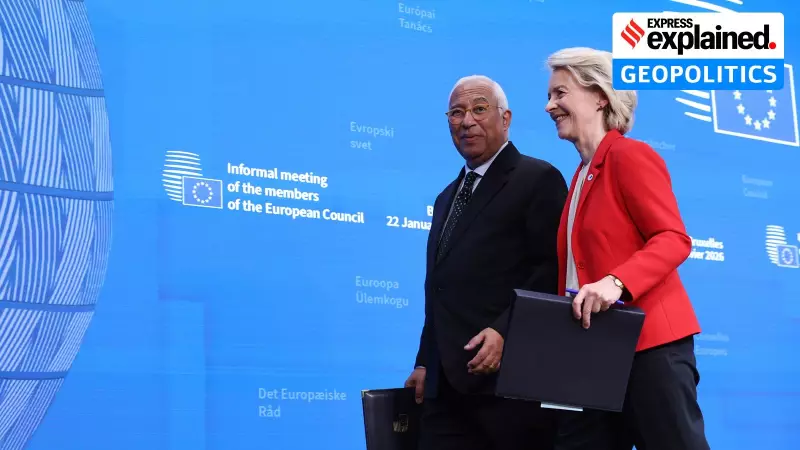
The foundations of India-EU relations trace back to 1962, when India established early diplomatic links with the European Economic Community. Over the decades, this partnership has evolved, with significant milestones such as the first India-EU Summit in 2000 under then Prime Minister Atal Bihari Vajpayee. Fast forward to 2026, and the visit of European Council President Antonio Costa and European Commission President Ursula von der Leyen to India marks a pivotal moment. As Chief Guests at the 77th Republic Day celebrations and co-chairs of the 16th India-EU Summit, their presence underscores the growing importance of this bilateral relationship.
Mutual Benefits: Why India and the EU Need Each Other
India holds immense value for the EU as the world's largest democracy and a rapidly expanding economy, projected to become the third-largest globally by 2030. With a young workforce and investments in technology, India serves as a key manufacturing and innovation hub. Conversely, the EU offers India a reliable ally in the Western Hemisphere, capable of navigating complex geopolitical challenges, such as those posed by the United States under Trump. Europe is also emerging as an attractive destination for Indian professionals and students, filling gaps left by restrictive U.S. policies.

Key Areas of Cooperation
Trade and Investments: A major anticipated outcome of the visit is the signing of the India-EU Free Trade Agreement (FTA). This pact is expected to boost economic growth and create opportunities for youth. The EU is India's largest trading partner in goods, with bilateral trade valued at approximately USD 136 billion in FY 2024-25. Additionally, around 6,000 European companies operate in India, employing millions directly and indirectly. Efforts are also underway to finalize an Investment Protection Agreement, a Macroeconomic Dialogue, and agreements on Geographical Indications and air transport.
Security and Defence: A security and defence partnership agreement is on the agenda, positioning India alongside Japan and South Korea as key EU partners in this domain. Joint naval exercises in regions like the Indian Ocean and Gulf of Aden highlight existing cooperation, with recent engagements including visits by Indian defence manufacturers to Brussels.
Migration and Mobility: An Agreement on Mobility Partnership aims to facilitate skilled Indian talent's movement to the EU. With a significant Indian diaspora in Europe, including large communities in Germany, the Netherlands, and Italy, Indian citizens lead in receiving EU residence authorizations for study and work, accounting for nearly 20.8% of EU blue cards issued in 2024.
Challenges and Divergences
Despite the progress, India-EU ties face sticking points. The Russia-Ukraine war has been a contentious issue, and India's human rights record has sparked private discussions. India seeks stronger EU stances on China and Pakistan, while Europe grapples with dependencies on China. Additionally, ambitious projects like the India-Middle East-Europe Economic Corridor (IMEC) remain stalled due to regional conflicts.
Looking Ahead
As India and the EU work towards a strategic roadmap, their partnership is poised to address global challenges and capitalize on mutual strengths. With agreements on trade, security, and mobility in the pipeline, both sides aim to build a resilient and dynamic relationship that benefits their economies and societies in an increasingly multi-polar world.






