

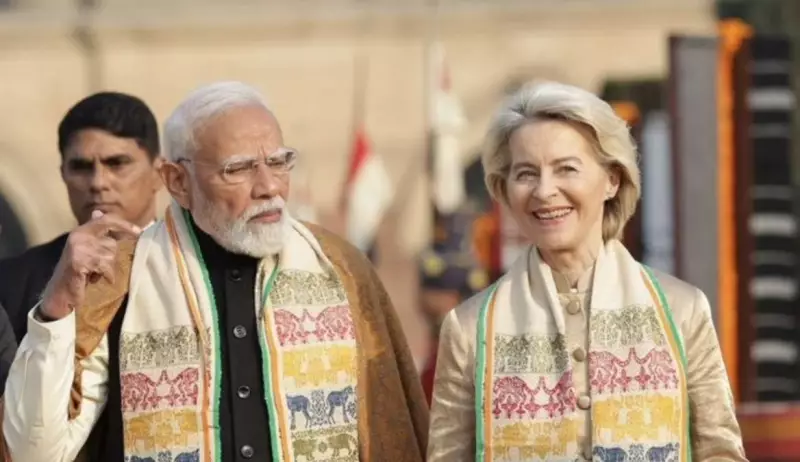
India and European Union Seal Monumental 'Mother of All Deals' in 2026
In a historic move that is set to reshape global economic and strategic landscapes, India and the European Union have officially signed a comprehensive agreement in 2026, widely referred to as the 'Mother of All Deals'. This landmark pact represents a significant milestone in bilateral relations, underscoring a shared commitment to deepening cooperation across multiple domains.
Scope and Significance of the Agreement
The agreement encompasses a broad spectrum of areas, including trade, investment, technology transfer, and strategic partnerships. It aims to boost economic ties by reducing tariffs, enhancing market access, and fostering innovation through collaborative research and development initiatives. The deal is expected to generate substantial economic benefits for both parties, potentially creating new job opportunities and driving growth in key sectors such as manufacturing, services, and digital economy.
Understanding the European Union
The European Union (EU) is a political and economic union comprising 27 member countries in Europe. Established to promote peace, stability, and prosperity, the EU operates as a single market with common policies on trade, agriculture, and regional development. Key institutions include the European Commission, European Parliament, and European Council, which work collectively to govern the union.

Member Countries of the European Union
The EU member states as of 2026 include:
- Austria
- Belgium
- Bulgaria
- Croatia
- Cyprus
- Czech Republic
- Denmark
- Estonia
- Finland
- France
- Germany
- Greece
- Hungary
- Ireland
- Italy
- Latvia
- Lithuania
- Luxembourg
- Malta
- Netherlands
- Poland
- Portugal
- Romania
- Slovakia
- Slovenia
- Spain
- Sweden
These countries collaborate under the EU framework to address common challenges and leverage collective strength in international affairs.
Implications for India-EU Relations
The signing of this deal marks a pivotal moment in India-EU relations, which have been steadily evolving over the years. It reflects a mutual recognition of the importance of strengthening ties in an increasingly interconnected world. The agreement is poised to enhance diplomatic engagement, facilitate cultural exchanges, and promote sustainable development goals through joint initiatives.
Experts highlight that this pact could serve as a model for other nations seeking to forge comprehensive partnerships, emphasizing the value of multilateral cooperation in addressing global issues such as climate change, digital transformation, and security concerns.
Future Prospects and Challenges
While the deal holds immense promise, its successful implementation will require ongoing dialogue and coordination between India and the EU. Key challenges may include navigating regulatory differences, ensuring equitable benefits, and adapting to dynamic global economic conditions. However, the strong foundation laid by this agreement is expected to foster resilience and innovation, paving the way for a prosperous and collaborative future.
In conclusion, the India-EU 'Mother of All Deals' is a testament to the growing strategic alignment between two major global players. As both sides embark on this new chapter, the world watches with anticipation, recognizing the potential for this partnership to drive positive change and set new benchmarks in international cooperation.






