

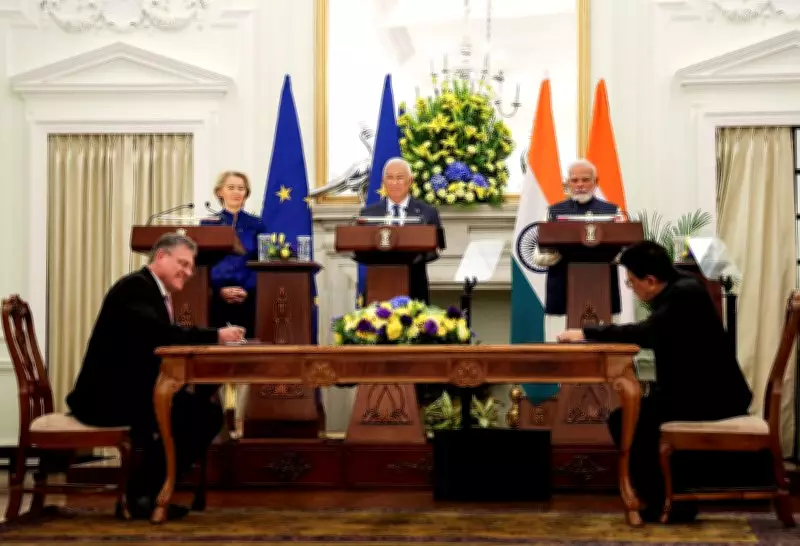
India-EU Bonhomie Confronts a Defining Litmus Test
The diplomatic and economic rapport between India and the European Union is currently undergoing a pivotal examination, often described as a litmus test that will shape the future trajectory of their bilateral relations. This critical phase emerges against a backdrop of shifting global alliances, economic uncertainties, and shared strategic interests that demand careful navigation from both New Delhi and Brussels.
Geopolitical Dynamics and Strategic Imperatives
At the heart of this litmus test lies the intricate web of geopolitical dynamics. India, as a rising global power in the Indo-Pacific region, and the EU, a formidable bloc with significant influence in Europe and beyond, find their interests increasingly converging on issues such as maritime security, counter-terrorism, and climate change. However, differences in approaches to conflicts in Eastern Europe and the Middle East, as well as varying stances on multilateral institutions, present challenges that require deft diplomatic handling to sustain the bonhomie.
Trade and Economic Negotiations: A Crucial Frontier
Economically, the litmus test is prominently visible in the ongoing negotiations for a comprehensive free trade agreement. Talks have been protracted, with hurdles related to market access, intellectual property rights, and regulatory standards. Both sides recognize the immense potential of enhanced trade—India offers a vast consumer market and growing digital economy, while the EU provides advanced technology and investment. Successfully concluding these negotiations would not only boost bilateral trade but also signal a robust commitment to deeper economic integration, serving as a key indicator of the partnership's resilience.

Shared Values and Divergent Priorities
The relationship is further tested by the balance between shared democratic values and divergent domestic priorities. India and the EU both champion principles of democracy, human rights, and rule of law, yet their internal political landscapes and policy focuses sometimes lead to friction. For instance, discussions on data privacy regulations, labor standards, and environmental policies highlight areas where alignment is essential but not always straightforward. Navigating these nuances is crucial to maintaining the bonhomie without compromising core national interests.
Global Context and Multilateral Cooperation
In the broader global context, the litmus test extends to multilateral forums such as the United Nations, G20, and World Trade Organization. Collaborative efforts on issues like sustainable development, digital governance, and pandemic preparedness are vital for demonstrating the strength of India-EU ties. However, competing visions for global order reform and differing approaches to international crises can strain cooperation. The ability to find common ground and present a united front in these arenas will be a significant measure of the partnership's maturity and strategic depth.
Future Prospects and Strategic Implications
Looking ahead, the outcome of this litmus test will have far-reaching implications for regional and global stability. A strengthened India-EU partnership could serve as a counterbalance to other geopolitical powers, foster innovation through joint research initiatives, and enhance connectivity projects. Conversely, failure to overcome current challenges might lead to missed opportunities and a weakening of collaborative efforts. Both sides are keenly aware that the stakes are high, and their actions in the coming months will determine whether the bonhomie evolves into a more enduring and impactful alliance.
In summary, the litmus test for India-EU relations is a multifaceted challenge encompassing geopolitics, economics, values, and global cooperation. As both entities work to address these issues, the world watches closely, recognizing that the success or failure of this partnership could redefine diplomatic and economic landscapes in the years to come.






