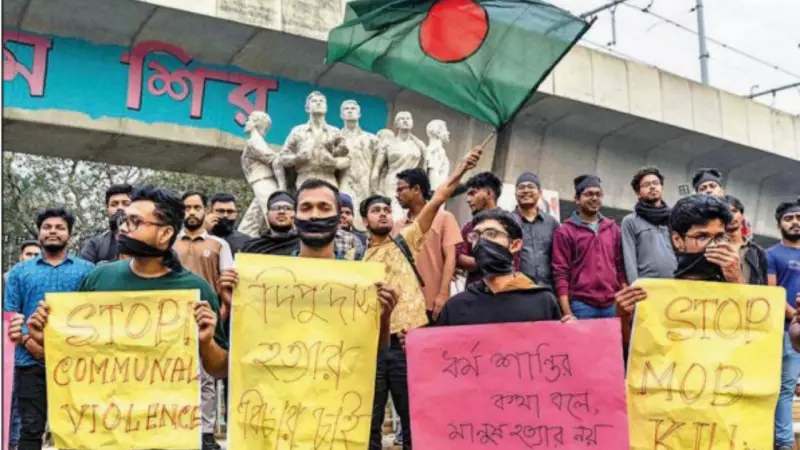
India has issued a stern condemnation of the Muhammad Yunus-led interim government in Bangladesh, accusing it of attempting to whitewash a series of brutal attacks targeting minority communities, particularly Hindus. The Ministry of External Affairs expressed deep concern over the recurring violence and the administration's failure to address the communal nature of the crimes.
A Pattern of Violence and a Firm Rejection
In a strongly-worded statement during the weekly briefing on Friday, official spokesperson Randhir Jaiswal slammed the Bangladeshi authorities for watering down the incidents. He stated that attempts to attribute the attacks to "personal rivalries and political differences" only serve to "embolden the perpetrators." Jaiswal emphasized that such communal incidents must be dealt with swiftly and firmly.
The Indian government's frustration stems from the interim administration's repeated dismissal of its concerns, which Dhaka has labelled as propaganda spread by Indian media. This diplomatic friction underscores the gravity of the situation as violence continues unchecked.

The Human Toll: Seven Lives Lost
The current wave of violence traces back to December 18, a date that marked a horrific turning point. On that day, garment factory worker Dipu Chandra Das was lynched in Mymensingh. His body was then hanged from a tree and set ablaze—an act India described as "horrendous" and "barbaric."
Since that tragic event, a total of seven Hindu men have been killed. The victims include:
- Amrit Mandal (killed December 24)
- Factory security guard Bajendra Biswas (December 29)
- Businessman Khokon Chandra Das (December 31)
- Journalist Rana Pratap and businessman Moni Chakraborty (Monday this week)
- Mithun Sarkar (Tuesday this week)
India has highlighted that independent sources have documented a staggering over 2,900 incidents of violence against minorities during the tenure of the current interim government. These incidents range from killings and arson to land grabs, painting a picture of widespread persecution that cannot be dismissed as media exaggeration.
Roots of the Crisis and Regional Implications
The internal situation in Bangladesh took a sharp downturn following the death of radical leader Sharif Osman Hadi on December 18. Hadi was a prominent figure in the 2024 anti-government protests that ultimately led to the ousting of then-Prime Minister Sheikh Hasina, who fled to India.
This political vacuum and the ensuing instability have created an environment where extremist elements have flourished, directly threatening the safety and security of minority populations. India's vocal stance reflects not only humanitarian concern but also deep unease about the stability of its neighboring nation.
The core issue, as articulated by New Delhi, is the refusal to acknowledge the communal intent behind the crimes. By failing to label the violence correctly and act decisively, the interim government risks normalizing a dangerous cycle of attacks that threatens the social fabric of Bangladesh and the bilateral relationship with India.