India Referenced in US Supreme Court Decision on Presidential Tariff Authority
A landmark ruling by the US Supreme Court has significantly curtailed presidential power to impose tariffs, with India directly cited in the judgment as an example of how such measures have been employed in foreign diplomacy. The case, Learning Resources, Inc. v. Trump, centered on the International Emergency Economic Powers Act (IEEPA), with the majority holding that this statute does not authorize a US president to levy tariffs, even when tied to international negotiations.
Dissent Highlights India's Role in Tariff Diplomacy
In a dissenting opinion, Justice Brett Kavanaugh underscored India's involvement, detailing how tariffs were leveraged during sensitive geopolitical discussions. The dissent noted that tariffs have historically served as tools in foreign affairs, with the US government arguing they facilitated trade deals worth trillions of dollars and opened markets for American businesses.
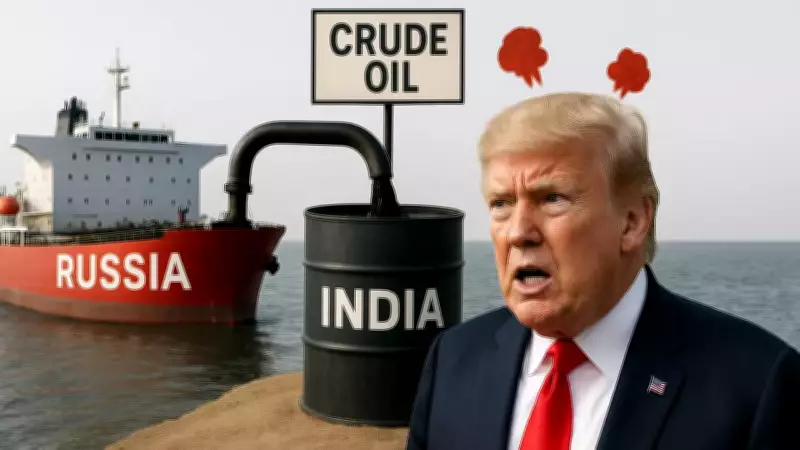
Specifically, India was mentioned in connection with efforts related to the Russia-Ukraine conflict. According to the judgment, on August 6, 2025, the president imposed tariffs on India for "directly or indirectly importing Russian Federation oil." Later, on February 6, 2026, these tariffs were reduced after India committed to halting such imports, as recorded in the dissent.

Foreign Policy Versus Constitutional Limits
The dissent argued that tariffs are integral to diplomacy and national security, cautioning against judicial restrictions on presidential authority in foreign affairs. It stated that statutes should be interpreted as written, without bias against the executive branch, and warned against applying the "major questions doctrine"—which requires clear congressional approval for major executive actions—to foreign policy decisions, calling it a novel intervention.
Majority Rejects Foreign Affairs Justification
However, the Supreme Court's majority firmly rejected the notion that foreign policy considerations expand tariff authority. Chief Justice John Roberts wrote that tariffs are essentially a form of taxation, falling exclusively under Congress's constitutional powers in Article I. The Court emphasized that no president had previously used IEEPA to impose tariffs in its nearly 50-year history, reinforcing that Congress never intended to delegate such broad authority, even in emergencies.
This ruling narrows executive power over trade policy, marking a pivotal moment in US constitutional law and international relations, with implications for how future administrations engage in tariff-based diplomacy.