

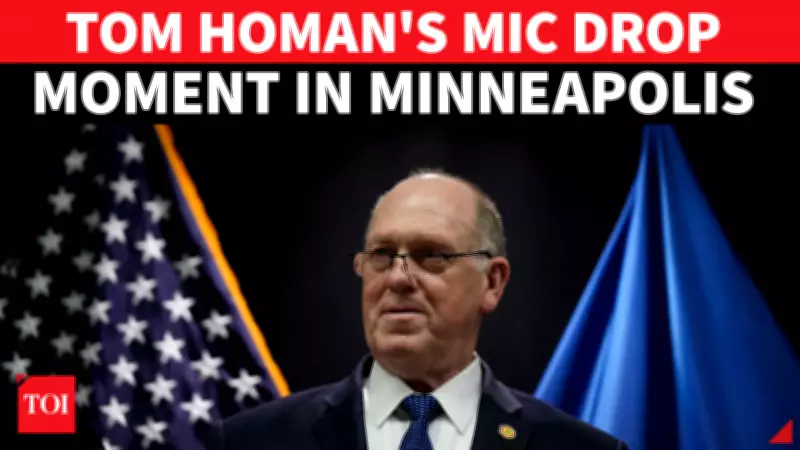
Tom Homan Announces Conditional ICE Drawback Plan for Minnesota
In a significant development regarding federal immigration policy, Tom Homan, President Donald Trump's border czar, has announced a potential reduction in the substantial federal immigration presence within Minnesota. However, this proposed drawback comes with specific and non-negotiable conditions that must be met by state and local authorities.
Key Conditions for Federal Withdrawal
Speaking at an event in Minneapolis, Homan made it unequivocally clear that any scaling back of Immigration and Customs Enforcement (ICE) operations is entirely dependent on the full cooperation of Minnesota's state and local officials. The administration's stance is that federal resources can be redirected only if local entities actively support and do not obstruct enforcement actions.
"I'm not a fool," Homan stated, emphasizing the administration's strategic approach. "We are willing to adjust our footprint, but not at the cost of public safety or the rule of law."

Zero Tolerance for Violence and Interference
The announcement follows two tragic fatal shootings this month involving federal officers in the region, which have heightened tensions. Homan issued a stern warning to protesters and activists, declaring the administration's "zero tolerance" policy for any violence or attempts to interfere with official enforcement operations.
He acknowledged that there have been operational missteps in the past but was adamant that the broader immigration crackdown is not concluding. Instead, Washington is signaling a possible strategic pivot towards more targeted and precise enforcement actions, rather than a blanket reduction.
Broader Context of Strained Relations
This development unfolds against a backdrop of increasingly strained relations between federal agencies and local leadership in the Twin Cities area. Mounting public protests and growing scrutiny of the administration's aggressive immigration strategies have created a complex political and social environment.
The proposed ICE drawback plan represents a potential de-escalation, but one that is firmly conditional. It underscores the ongoing negotiation of power and policy between federal mandates and local autonomy in the contentious arena of immigration enforcement.






