

India's Calculated Diplomacy in a Turbulent Global Arena
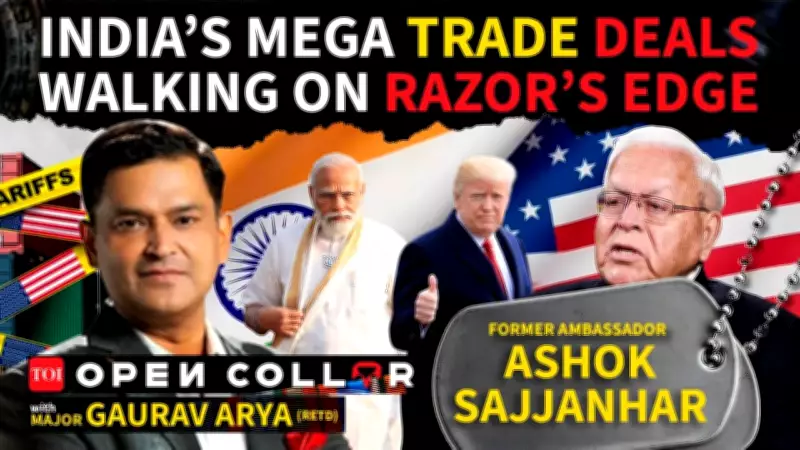
In a revealing discussion on OPEN COLLAR, Major Gaurav Arya and former Ambassador Ashok Sajjanhar delved into the intricate dynamics of India's foreign policy during a period of intense global volatility. The conversation centered on how New Delhi adeptly managed complex international relations, particularly under the pressure of Trump-era trade policies.
Navigating Trump's Tariff Onslaught
The United States, under President Donald Trump, imposed significant tariff pressures on multiple trading partners, creating a challenging environment for global commerce. India, as a major emerging economy, found itself at the crossroads of these economic tensions. Ambassador Sajjanhar highlighted that instead of engaging in public confrontations, India adopted a strategy of calm and calculated silence. This approach allowed New Delhi to assess the situation thoroughly without escalating diplomatic friction.
India's response was not one of passivity but of strategic restraint, ensuring that national interests remained paramount over short-term political alliances. The discussion emphasized how this silence was a deliberate tactic to avoid being drawn into the broader credibility crisis facing American foreign policy at the time.

Diversifying Partnerships and Securing Autonomy
A key theme of the dialogue was India's proactive efforts to diversify its international partnerships. This involved negotiating mega trade deals with various nations and regions, reducing dependency on any single country. Energy choices and access to critical minerals were identified as vital components of this strategy, as India sought to secure resources essential for its economic and technological growth.
The shifting global alignments, with emerging powers and changing alliances, presented both opportunities and risks. India's diplomacy focused on safeguarding its strategic autonomy, ensuring that it could make independent decisions without undue external influence. This balancing act was described as walking a razor's edge in global power politics, where missteps could have significant repercussions.
Key Insights from the Discussion
- India's diplomatic silence during Trump's trade pressure was a strategic move to protect national interests.
- New Delhi is actively pursuing diverse trade agreements to enhance economic resilience.
- Energy security and critical minerals are central to India's long-term strategic planning.
- Maintaining strategic autonomy is crucial in a multipolar world with evolving alliances.
- India's approach demonstrates a mature and nuanced understanding of global power dynamics.
Overall, the episode underscored how India's diplomacy has evolved to navigate complex international challenges, emphasizing pragmatism and long-term vision over reactive politics. This strategy has positioned India as a key player in global affairs, capable of outmaneuvering external pressures while advancing its own developmental goals.






