

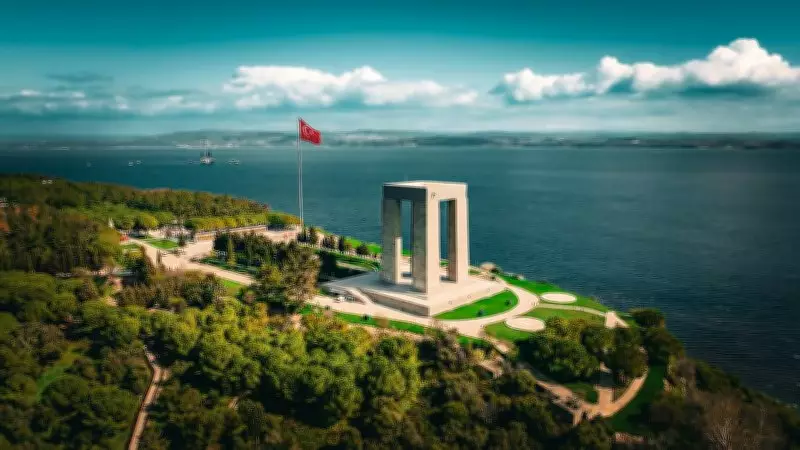
Hormuz Crisis Echoes Gallipoli-1915: A Stark Historical Parallel
The ongoing crisis in the Strait of Hormuz carries chilling echoes of the 1915 Gallipoli campaign, a historical lesson that narrow straits defy both naval might and political pressures. As tensions escalate in the US-Israel-Iran conflict, the strategic chokepoint off Iran's southern coast has transformed into a fortified zone, with shipping traffic plummeting and global oil markets in turmoil.
The Gallipoli Naval Gamble: A Century-Old Warning
In 1915, the Allied forces, led by Winston Churchill, launched an ambitious naval operation to force the Dardanelles strait and knock the Ottoman Empire out of World War I. The plan relied on surface superiority, with a formidable fleet including the super-dreadnought HMS Queen Elizabeth and French battleships like Bouvet. However, Ottoman defenses—coastal forts, mobile howitzers, and layered minefields—proved devastating.
On March 18, 1915, the naval assault reached its climax. Three capital ships were lost, including Bouvet, which capsized with 639 sailors, and three others were severely damaged. Nearly 700 Allied lives were lost in hours, forcing Vice Admiral John de Robeck to withdraw. The failure led to a costly land campaign, with over 250,000 casualties on each side, and left Churchill's career in tatters. The lesson was clear: narrow straits defended by integrated mines and shore fire cannot be forced without catastrophic loss.

Hormuz Today: Modern Defenses and Escalating Risks
Today, the Strait of Hormuz presents a similar geographical challenge—a narrow 39-kilometer chokepoint through which 20% of the world's seaborne oil once flowed. However, modern technology has amplified the dangers. Iran's Islamic Revolutionary Guard Corps (IRGC) has declared the strait under "special conditions," deploying anti-ship ballistic missiles, explosive drone boats, and sea drones. Since early March 2026, at least 21 merchant vessels have been attacked, resulting in casualties and abandoned tankers.
Naval mines, including contact and limpet types, litter the area, and despite US efforts to destroy minelayers, the threat persists. The US military has taken a firm stance, refusing to escort commercial tankers through the mine-laced strait. General Dan Caine, Chairman of the Joint Chiefs of Staff, warned that any forced passage could replicate the Gallipoli disaster but with 21st-century lethality, as modern warships like Aegis destroyers are vulnerable in confined waters.
Political Pressures and Global Paralysis
Despite President Donald Trump's repeated calls for coalition warships to "reopen the strait," the Pentagon's resistance forced a pivot. On March 12, 2026, Trump shifted responsibility, urging Europe, Japan, India, and China to send their own ships. The global response has been tepid: NATO offers only token support, while major powers cite domestic risks. This paralysis has kept oil prices near $100 per barrel, with Brent crude briefly spiking to $126.
Iranian defenses mirror the Ottoman model but are enhanced with modern technology. Shore-based missiles act as mobile forts, and fast-attack craft replace howitzers. The IRGC asserts that losing Hormuz means losing the war, echoing Ottoman determination. The economic stakes are immense, with Gulf production slashed and tankers rerouting via the Cape of Good Hope, inflicting billions in war-risk insurance costs.
Lessons from History: Avoiding a Strategic Defeat
The parallels between Gallipoli and Hormuz are stark. In 1915, assumptions about naval supremacy and quick minesweeping proved fatal. Today, similar overconfidence in Aegis systems and helicopter minesweepers could lead to disaster. The US Navy's mine-countermeasures force remains under-resourced, and clearing contested fields under fire could take weeks. A single missile strike on a destroyer could produce political shock exceeding the loss of Bouvet in 1915.

Vice Admiral de Robeck's decision to withdraw in 1915 demonstrated moral courage in the face of unacceptable losses. Today's US commanders must show similar resolve as political imperatives and global panic drive them toward a modern Gallipoli. The Dardanelles taught that narrow straits respect neither battleship guns nor political deadlines. Hormuz, armed with advanced weapons, reinforces this lesson. While disaster is not inevitable, ignoring the truths of 1915 brings it perilously close.
The writer served as the AOC-in-C of the Western and Eastern Air Commands.





