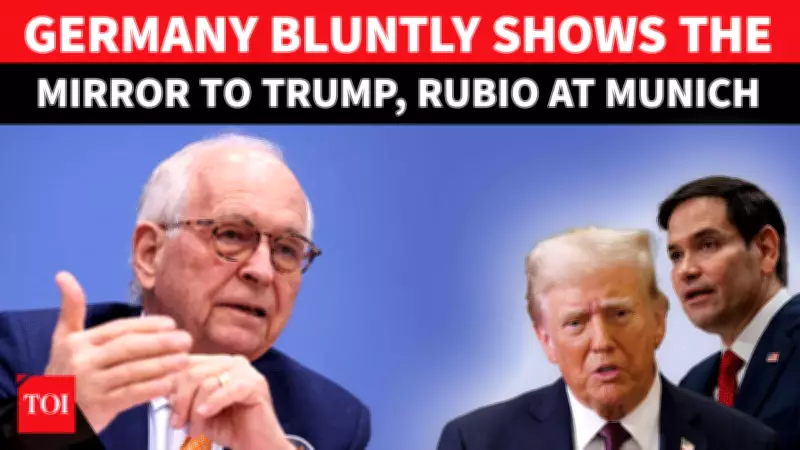
Top German Diplomat Raises Concerns Over Western Alliance Cohesion
At the prestigious Munich Security Conference, senior German diplomat Wolfgang Ischinger delivered a sobering assessment of the current state of the Western alliance. His comments came in response to remarks made by U.S. Secretary of State Marco Rubio, sparking a significant debate about the future of transatlantic cooperation.
"Doubt We Are Still On The Same Team"
Ischinger, a respected figure in international diplomacy, expressed profound concerns about the widening differences within the Western alliance. His statement, "I doubt we are still on the same team," captured the growing anxiety among European leaders about the direction of transatlantic relations under the current U.S. administration.
The German diplomat specifically referenced Rubio's speech about "renewal and restoration" of international partnerships. Ischinger highlighted how this has ignited a broader discussion among policymakers about whether the transatlantic relationship merely requires repair or demands a more fundamental reset of its foundational principles.

Political Red Lines and Alliance Sensitivity
During his conference remarks, Ischinger emphasized the critical importance of maintaining certain political boundaries within the alliance framework. He cautioned that specific red lines should not be crossed, underscoring the delicate nature of alliance unity in an increasingly volatile geopolitical landscape.
The diplomat's warnings reflect growing European concerns about maintaining stability while navigating complex international challenges. His comments suggest that European leaders are carefully monitoring U.S. foreign policy shifts and their potential impact on collective security arrangements.
Broader Implications for Geopolitical Stability
Ischinger's intervention at the Munich Security Conference highlights several key issues facing the Western alliance:
- Diverging strategic priorities between European and American policymakers
- Questions about commitment levels to established international frameworks
- Concerns about political rhetoric that might undermine alliance cohesion
- The need for clear communication about shared values and objectives
The Munich Security Conference has traditionally served as a platform for addressing transatlantic security concerns, but this year's discussions revealed deeper fissures than in previous gatherings. Ischinger's remarks suggest that European diplomats are preparing for potentially significant shifts in how the Western alliance operates and coordinates on global issues.
As geopolitical tensions continue to evolve, the relationship between European powers and the United States remains a critical factor in maintaining international stability. Ischinger's candid assessment serves as both a warning and an invitation for more transparent dialogue about the future of transatlantic cooperation.