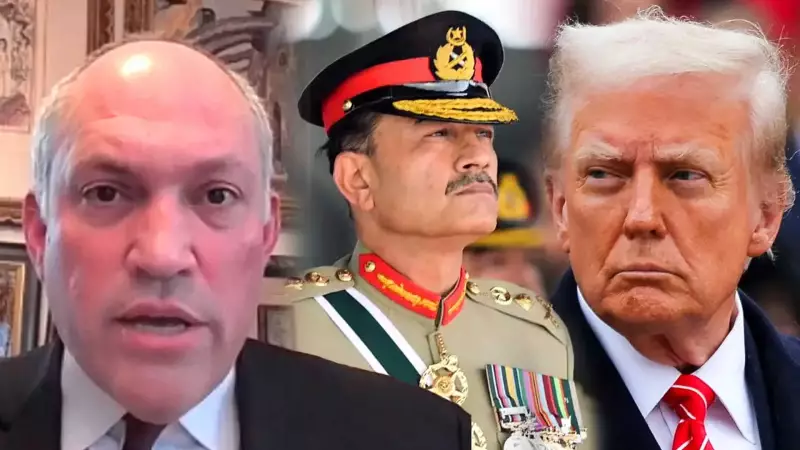
A former senior US defense official has ignited a major diplomatic firestorm by making explosive remarks about Pakistan, its military leadership, and America's policy towards India. Michael Rubin, a former Pentagon official, called for drastic measures against Pakistan and a significant course correction in Washington's approach to New Delhi.
Rubin's Explosive Allegations and Demands
In comments that have sent shockwaves through international strategic circles, Michael Rubin declared Pakistan a "terrorist state." He went a step further by demanding that Pakistan's Army Chief, General Asim Munir, should be arrested if he ever sets foot on American soil. Rubin launched a scathing critique of current US foreign policy, describing Washington's stance as fundamentally "illogical."
He argued that the United States has consistently failed to treat India with the respect it deserves, especially given New Delhi's immense and growing strategic importance on the world stage. According to Rubin, this failure is so significant that America owes India a clear and unambiguous apology for several months of diplomatic misjudgment and poor policy choices.

Criticism of Trump and Reference to Past Conflicts
Rubin did not limit his criticism to current policies. He also took aim at former US President Donald Trump, accusing him of damaging the crucial partnership between India and the United States. Rubin challenged Trump's past claims of having "ended" a major regional conflict.
He specifically referenced the period of tension that followed the Pahalgam terror attack and India's subsequent military response, Operation Sindoor. Rubin asserted that Trump's narrative about resolving this crisis was false, and that his actions during that time actually weakened the bonds between Washington and New Delhi.
Timing and Global Repercussions
These provocative statements were made public on December 6, 2025. They come at a time when the India-US relationship is undergoing what experts describe as a critical phase of recalibration. The comments have triggered intense debate among policymakers, analysts, and diplomats worldwide.
The fallout from Rubin's allegations highlights the delicate and often volatile nature of diplomacy in South Asia. His call to label Pakistan a terrorist state and target its top military official represents one of the most severe public rebukes from a former American security insider in recent years. Simultaneously, his push for the US to apologize to India underscores a growing belief among some foreign policy circles that Washington has underestimated its democratic partner in Asia.
As global powers reassess their alliances and strategies, this episode adds a sharp new edge to discussions about terrorism, regional stability, and the future of the strategic triangle involving the United States, India, and Pakistan.