

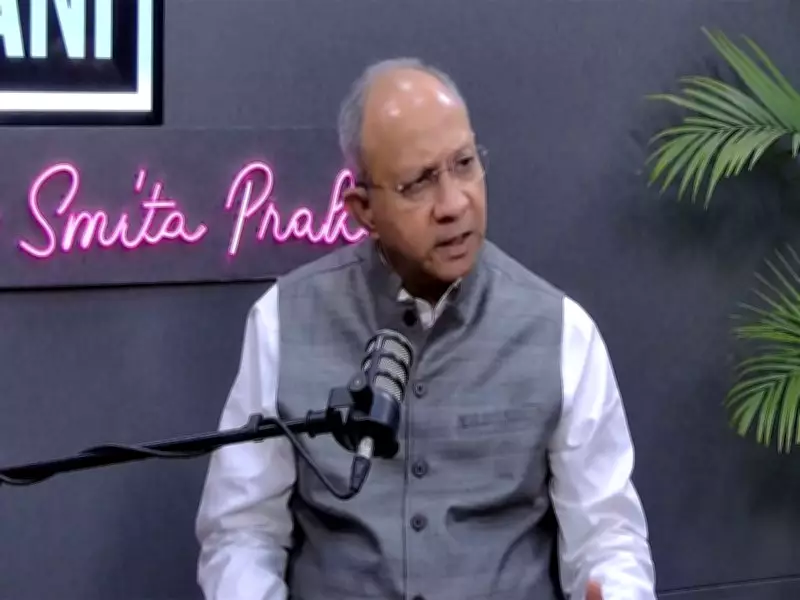
Former Indian Deputy NSA Pankaj Saran Discusses India's Strategic Posture in West Asia
In a revealing commentary on India's diplomatic maneuvers, former Deputy National Security Advisor Pankaj Saran has articulated that India's deliberate silence on certain issues in West Asia played a pivotal role in enabling the United States, Israel, and Gulf states to forge a cohesive strategic alignment. This insight sheds light on the nuanced and calculated approach that India has adopted in one of the world's most volatile regions, balancing its national interests with global geopolitical shifts.
The Context of India's Strategic Silence
Pankaj Saran, who served as India's Deputy NSA from 2015 to 2018, emphasized that India's restrained public stance was not a sign of passivity but a carefully crafted strategy. By avoiding overt commentary on sensitive matters, India created a diplomatic space that allowed key players like the US, Israel, and Gulf nations to consolidate their positions without external interference. This approach, according to Saran, was instrumental in fostering a more stable environment for regional cooperation, which aligns with India's broader objectives of energy security and economic partnerships in West Asia.
The implications of this silence are profound, as it underscores India's growing role as a silent yet influential actor in international affairs. Saran pointed out that this strategy helped mitigate potential conflicts and facilitated dialogue among nations with divergent interests, thereby contributing to a more predictable geopolitical landscape in West Asia.

Impact on US-Israel-Gulf Dynamics
The former deputy NSA detailed how India's posture indirectly supported the formation of a trilateral axis involving the United States, Israel, and Gulf states such as Saudi Arabia and the United Arab Emirates. This alignment, often driven by shared concerns over regional threats and economic opportunities, has reshaped West Asian politics in recent years. Saran noted that India's silence allowed these nations to pursue their strategic goals without the complication of public disagreements from a major power like India, which maintains significant ties with all parties involved.
This dynamic highlights India's ability to navigate complex diplomatic waters, leveraging its non-aligned heritage while engaging pragmatically with multiple blocs. Saran's analysis suggests that India's approach has not only preserved its bilateral relationships but also enhanced its credibility as a reliable partner in the region.
Broader Implications for India's Foreign Policy
Pankaj Saran's remarks offer a window into the strategic thinking behind India's foreign policy in West Asia, a region critical for India's energy imports and diaspora interests. By opting for silence, India has managed to:
- Avoid alienating key allies in the Gulf and beyond.
- Maintain a balanced stance amidst escalating tensions.
- Position itself as a mediator or facilitator in future diplomatic initiatives.
This strategy reflects a broader trend in India's global engagement, where quiet diplomacy often takes precedence over public posturing. Saran emphasized that such an approach is essential for a rising power like India, which must juggle multiple priorities without compromising its core values or national security.
In conclusion, Pankaj Saran's insights reveal that India's strategic silence in West Asia was a calculated move that significantly aided the alignment of the US, Israel, and Gulf states. This not only underscores India's growing diplomatic acumen but also its role in shaping regional stability through subtle yet impactful means. As global dynamics continue to evolve, India's ability to leverage such strategies will be crucial in maintaining its influence and advancing its interests on the world stage.






