

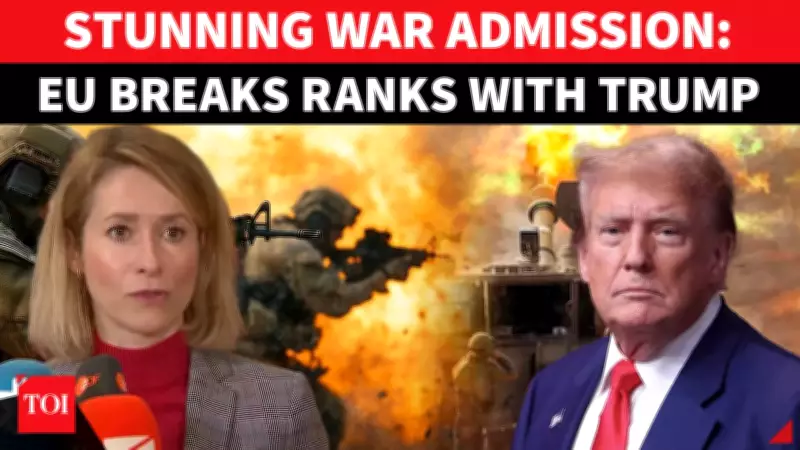
EU Foreign Policy Chief Kaja Kallas Delivers Blunt Assessment of US Support for Ukraine
In a rare and candid statement that has sent shockwaves through diplomatic circles, European Union foreign policy chief Kaja Kallas has publicly admitted that the United States has not backed Ukraine for almost a full year. This stark revelation comes at a time when transatlantic relations are already under significant strain, with Kallas warning that the historic partnership between Europe and Washington is no longer what it once was.
Europe Forced to Step Up as Russia Intensifies Attacks
Speaking ahead of a crucial EU Foreign Affairs Council meeting, Kallas emphasized that Europe has been compelled to dramatically increase its support for Ukraine across multiple fronts. Military assistance, energy security, and humanitarian aid have all seen substantial European contributions as Russia continues to escalate its assaults on Ukrainian civilian populations and critical infrastructure.
The timing of Kallas's remarks is particularly noteworthy, coinciding with ongoing trilateral talks involving US, Russian, and Ukrainian officials in Abu Dhabi. Notably, these discussions are proceeding without any European representation, a point that Kallas highlighted with evident concern.

Strained Relations and Geopolitical Tensions
The admission from Brussels arrives against a backdrop of already fraying relations between European capitals and Washington. Several contentious issues have contributed to this diplomatic friction:
- Ongoing disputes over Greenland's strategic importance
- Fundamental disagreements about NATO's future direction and capabilities
- Persistent trade conflicts affecting economic relations across the Atlantic
Kallas firmly asserted that any potential peace agreement to end the conflict in Ukraine must include European participation, arguing that since the war is being fought literally on Europe's doorstep, the continent has both a vital interest and a legitimate role in any resolution process.
The Broader Implications for Transatlantic Partnership
This extraordinary public acknowledgment from one of Europe's top diplomats signals a potentially significant shift in how EU officials perceive and articulate their relationship with the United States. The statement reflects growing European concerns about Washington's commitment to shared security interests and represents what many analysts see as an increasingly independent European foreign policy stance.
As the war in Ukraine continues with no immediate end in sight, and with critical negotiations proceeding without European involvement, Kallas's words underscore the complex challenges facing the transatlantic alliance. Her blunt assessment serves as both a warning about current tensions and a call for renewed cooperation between traditional allies facing unprecedented geopolitical challenges.






