

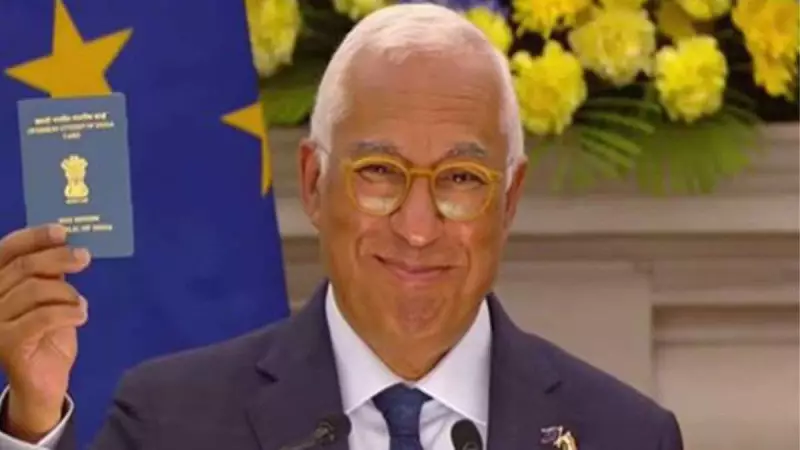
EU Council President Antonia Costa's Personal Touch in Highlighting India-EU Relations
In a notable diplomatic moment, European Union Council President Antonia Costa made headlines by showcasing his passport during a recent address. This symbolic act was not merely a casual gesture but a deliberate move to underscore the deeply personal and evolving nature of the ties between India and the European Union. Costa's speech, which has garnered significant attention, focused on reinforcing the strategic partnership and outlining collaborative goals for the year 2026.
The Passport Display: A Symbol of Shared Identity and Commitment
During his presentation, President Costa paused to hold up his passport, using it as a visual prop to convey a message of unity and mutual respect. He emphasized that the relationship between India and the EU transcends formal diplomatic channels, rooted in personal connections and shared values. This act resonated with audiences, highlighting how individual experiences and identities can bridge international divides and foster stronger alliances.
Costa articulated, "Our bonds are not just about policies or agreements; they are personal, built on trust and common aspirations." This statement reflects a growing trend in global diplomacy where leaders aim to humanize international relations, making them more relatable and impactful for citizens on both sides.

Strategic Vision for India-EU Partnership in 2026
Beyond the symbolic gesture, President Costa outlined key areas of cooperation that will define the India-EU relationship in the coming years. He discussed ambitious plans for 2026, focusing on:
- Economic Collaboration: Enhancing trade and investment flows to boost mutual growth and innovation.
- Technological Advancements: Partnering on digital infrastructure, cybersecurity, and sustainable tech solutions.
- Climate Action: Joint initiatives to address environmental challenges and promote green energy.
- Cultural Exchanges: Strengthening people-to-people ties through educational and cultural programs.
These priorities align with broader global trends, positioning India and the EU as pivotal players in shaping a stable and prosperous future. Costa's emphasis on a "personal" connection suggests a shift towards more empathetic and inclusive diplomacy, which could lead to more resilient and long-lasting partnerships.
Implications for Global Diplomacy and India's Role
This incident underscores the importance of personal narratives in international relations. By sharing a part of his identity through his passport, President Costa has set a precedent for how leaders can engage with global audiences in a more authentic manner. For India, this gesture reinforces its growing stature on the world stage, as major powers like the EU seek to deepen ties based on mutual respect and shared goals.
Experts note that such moments can enhance public perception and support for diplomatic initiatives, making complex geopolitical issues more accessible. As India continues to navigate its role in a multipolar world, gestures like Costa's passport display serve as reminders that diplomacy is not just about treaties but about building trust and understanding across cultures.
In conclusion, Antonia Costa's passport gesture during his speech is more than a fleeting news item; it is a powerful symbol of the personal dimensions shaping India-EU relations. With a clear vision for 2026, this partnership is poised to achieve significant milestones, driven by a foundation of genuine connection and collaborative spirit.






