

Dhaka Gripped by Massive Protests Over Delayed Pay Scale Implementation
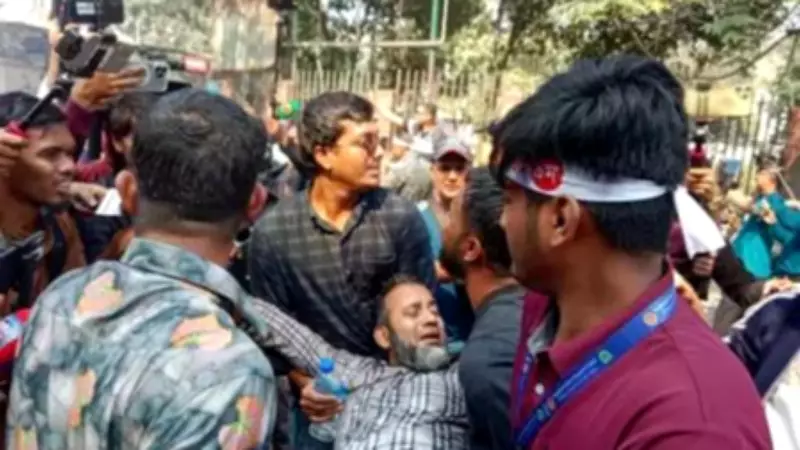
Intense demonstrations erupted across the capital city of Dhaka on Friday as thousands of government employees took to the streets demanding immediate implementation of the ninth national pay scale. The protests centered around Chief Adviser Mohammad Yunus's official residence, Jamuna, triggering significant security responses and disrupting normal life in several key areas of the city.
Police Deploy Heavy Security Measures Amid Escalating Tensions
Security forces implemented extensive measures to contain the growing unrest, deploying water cannons, tear gas shells, and sound grenades against protesters who attempted to breach police barricades near the Chief Adviser's residence. According to official reports, six platoons of Border Guard Bangladesh (BGB) were mobilized to secure sensitive locations including the Kakrail Mosque and Hotel InterContinental area.
Dhaka Metropolitan Police Commissioner SM Sajjat Ali personally visited the protest sites to monitor the volatile situation, while Deputy Commissioner of Police Masud Alam emphasized that authorities were working diligently to prevent any deterioration in law and order. "We are remaining alert so that law and order does not deteriorate. We are talking to the protesters so that they move elsewhere," Alam stated during the unfolding crisis.

Protest Timeline and Traffic Disruption Details
The demonstrations began around 10:30 AM when government employees started gathering at Shahbagh intersection, effectively blocking major thoroughfares and bringing vehicular movement to a complete standstill. Despite repeated police requests to clear the roads, protesters refused to disperse, instead marching toward Jamuna residence while chanting powerful slogans including "No compromise, only struggle" and "Implement the pay scale immediately."
By 11:30 AM, protesters had defied initial barricades at Shahbagh and reached the Hotel InterContinental crossing, where police attempted to halt their advance. The situation escalated around noon when security forces employed tear gas and water cannons against the gathering crowd. Traffic along the crucial Banglamotor–Shahbagh road remained paralyzed for several hours before gradually resuming after 1:15 PM, according to United News of Bangladesh reports.
Protesters Voice Economic Hardships and Political Concerns
The demonstrating employees, organized under the banner of Sarkari Karmachari Dabi Adai Oikya Parishad (Government Employees' Unity Council for Realisation of Demands), expressed deep frustration over the prolonged delay in implementing the revised pay structure. Borhan Uddin, an office assistant at the Department of Youth Development, articulated the collective sentiment: "The government has completed all the procedures for the ninth pay scale but has not issued the gazette notification. This has been our long-standing demand."
Several protesters highlighted severe personal financial struggles, with one detained participant revealing he was the sole earning member of his family and could no longer sustain them on his current salary. The employees collectively warned that if the gazette notification for the ninth pay scale is not issued immediately, they would continue their movement indefinitely and refuse to return home.
Additional Protest Context and Security Arrangements
Complicating the security landscape, an additional sit-in protest was already underway near Jamuna residence, organized by the platform Inqilab Moncho. This group had been demonstrating since Thursday afternoon, demanding a United Nations-led impartial investigation into the killing of Shaheed Sharif Osman bin Hadi.
Government employees expressed particular concern that pay scale implementation could face further delays once an elected government assumes office, emphasizing that the pay commission has already submitted its comprehensive report and that the new scale could be implemented immediately through a simple gazette notification. Security remained exceptionally tight around the Chief Adviser's residence throughout the afternoon, with police maintaining reinforced barricades near Hotel InterContinental and adjacent roads as the protests continued.

The protesting employees maintained that their gathering was solely focused on pressing for the pay scale revision, with no other political intentions. However, the scale of demonstrations and the determined response from security forces created a tense atmosphere in central Dhaka, highlighting the growing urgency of addressing government employees' longstanding financial demands.





