DGCA Exonerates Boeing Dreamliner, Points to Pilot Procedure Lapses
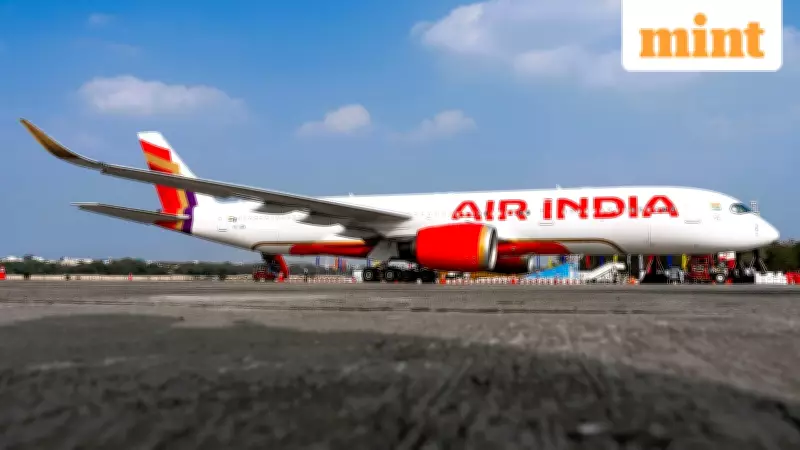
The Directorate General of Civil Aviation (DGCA) has officially concluded that there was no technical malfunction in the grounded Boeing Dreamliner aircraft operated by Air India. In a significant development, the regulator has directed the airline to enhance pilot training specifically on the correct procedures for operating fuel control switches in these wide-bodied planes.
Regulator's Findings: Mechanical Fault Ruled Out
In a detailed statement released on Tuesday, the DGCA clarified that the fuel switch issue reported on an Air India Boeing 787-8 aircraft was not attributable to any mechanical defect. The investigation determined that the problem stemmed from incorrect handling techniques. Notably, the report refrains from directly assigning blame to pilots or crew members, focusing instead on procedural aspects.
The incident originated when Air India grounded a London-Bengaluru Dreamliner flight after the pilot reported potential anomalies with the fuel control switches. The aircraft had safely landed in Bengaluru on Monday prior to the grounding.

Critical Safety Components Under Scrutiny
Fuel control switches represent critical cockpit components that pilots utilize to manage fuel flow to aircraft engines. Any irregularity concerning these switches is treated as a paramount safety issue, mandating immediate technical evaluation by both the airline and the aircraft manufacturer.
These switches were also central to last year's tragic crash involving an Air India Dreamliner in Gujarat, which resulted in 260 fatalities. That incident had already intensified regulatory scrutiny of the airline's operations.
DGCA's Technical Assessment and Directive
The DGCA statement provided specific technical observations: "Both left and right switches were checked and found satisfactory... When full force was applied parallel to the base plate, the switch remained secure. However, applying external force in an incorrect direction caused the switch to move easily from run to cutoff due to the angular base plate allowing slip when pressed improperly with finger or thumb."
Consequently, the regulator has advised Air India to circulate Boeing's recommended procedure for operating the fuel cut-off switch to all crew members. As of now, Air India has not issued an official response to these findings.
Aviation Experts Express Lingering Doubts
Despite the DGCA's conclusions, several aviation experts remain unconvinced by the explanation provided.
Sanjay Lazar, an aviation expert and CEO of Pune-based Avialaz Consulting, interpreted the regulator's wording: "The 'external force' referred to in the DGCA statement appears to imply a crew action, as the DGCA states that the switch would not move from run to cutoff unless external force was applied in an incorrect direction. Given that no one else is present in the cockpit near these switches in these flight situations, the wording seems to suggest that the switch movement in this instance was caused by the improper application of external force by the flight crew."
Mark D. Martin, an aviation consultant and CEO of Gurugram-based Martin Consulting, criticized the DGCA for potentially downplaying the defect's severity: "The fuel switch has to lock and stay locked, irrespective of any inadvertent external force from any direction, position, or angle. This defies the very idea of a mechanical lock. Any and all external force should not allow any travel of the switch from run to cutoff. The DGCA should have ordered an immediate comprehensive check of all Boeing 787 fuel switches to establish and verify the anomaly before coming out with a statement."
Martin further warned about potential repercussions: "The repercussions I see with this is that pilots and peer regulators globally will not accept the DGCA position, and in turn take arbitrary steps to not fly if no proper action on the switch-maker is recommended."

C.S. Randhawa, President of the Federation of Indian Pilots, offered a different perspective, suggesting the pilot should have reported the issue earlier: "The issue of a possible fuel switch defect should have been noted in Heathrow/London itself, and not in Bengaluru. At least, the pilot did the right thing by raising the issue. Also, as a precautionary measure, the DGCA should order a thorough check of the Boeing fleet in question."
The DGCA has not responded to follow-up emailed questions regarding these expert critiques.
Air India's Proactive Measures and Fleet Context
Earlier, Air India had proactively sought assistance from Boeing to conduct a priority evaluation of the issues identified with the grounded Dreamliner jet.
According to an internal communication, the Tata Group-backed airline had flagged a potential defect in a fuel control switch on one of its Boeing 787 Dreamliners and contacted the US-based manufacturer for urgent assessment.
A letter from Manish Uppal, Senior Vice-President of Flight Operations at Air India, dated 3 February and addressed to Boeing 787 pilots, outlined the airline's response. It stated that the engineering team reported the fuel control switch latch issue and, as a precaution, initiated a fleet-wide re-inspection of this component across its entire 787 fleet.
The letter explained: "Following the reported defect involving a fuel control switch on one of our B787 aircraft, engineering has escalated the matter to Boeing for priority evaluation." It further noted that while awaiting Boeing's response, company engineers had begun precautionary inspections out of an abundance of caution, with no adverse findings reported thus far on inspected aircraft.
Crew members were instructed to promptly report any observed defects during operations and ensure all required actions are completed before accepting an aircraft.
Strategic Importance of Dreamliner Fleet
The Boeing 787 Dreamliner holds strategic importance for Air India's long-haul operations. The airline currently operates a fleet of 33 Dreamliners, with the most recent aircraft delivered in January 2026. Collectively, Air India and its low-cost subsidiary Air India Express maintain a combined fleet of 297 aircraft, comprising both Boeing and Airbus models.
Boeing has acknowledged the situation, stating: "We are in contact with Air India and are supporting their review of this matter." This ongoing collaboration underscores the critical nature of ensuring aircraft safety and operational reliability in the competitive aviation sector.