

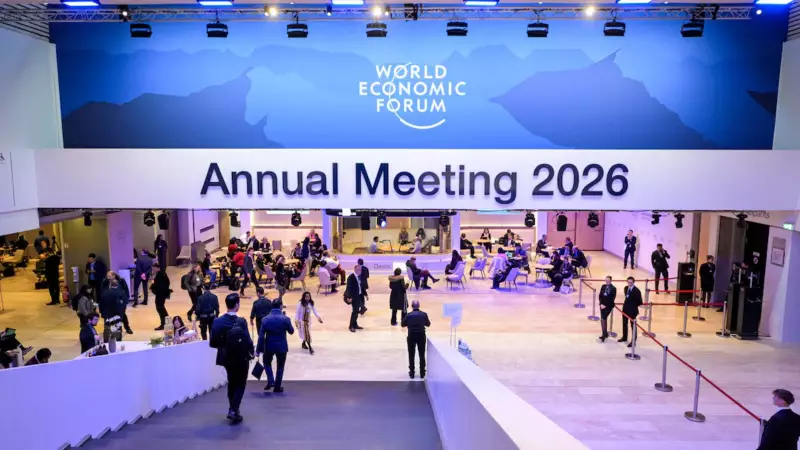
The World Economic Forum at Davos in 2026 demonstrated its unique capacity to influence global geopolitics, particularly in the high-stakes arena of transatlantic relations. While the event did not produce any formal treaties, joint communiqués, or new institutional frameworks, it played a crucial role in de-escalating a rapidly intensifying quarrel over Greenland. By bringing together a record 400 political leaders, including 65 heads of state, and 830 CEOs, Davos provided an unparalleled platform for dialogue among individuals who might otherwise communicate only through confrontational means.
The Core of the Greenland Controversy
The drama at Davos revolved around an old instinct of Donald Trump: treating geopolitics as a property negotiation. Greenland, strategically positioned in the high north and already hosting significant US military infrastructure, became a focal point. Trump portrayed the island as a core US security requirement, while European allies viewed any talk of acquisition as a direct challenge to sovereignty. This tension threatened to spiral into a broader conflict, with the US considering tariff strikes against European countries and even the prospect of force being used against a NATO ally.
Key Interventions and Diplomatic Maneuvers
Canadian Prime Minister Mark Carney delivered a pivotal speech that served as a manual for middle powers navigating relationships with giants. He emphasized the need to acknowledge the world's "rupture," avoid confusing ritual with protection, and build domestic strength while diversifying internationally. More specifically, Carney stated Canada's firm support for Greenland and Denmark, opposing tariffs over Greenland and calling for focused talks on Arctic security and prosperity. This intervention was significant because it reframed the dispute from a bilateral US-Denmark issue to a stress test for allied norms, offering Europe a vocabulary of opposition to coercion and insistence on self-determination.

European leaders, for once, acted cohesively as a bloc, making it clear that coercive tools like tariffs would be seen as an attack on the alliance's foundations rather than a negotiating tactic. This shift towards less hedging and more boundary-setting was captured at Davos, signaling a willingness to assert that sovereignty is not a bargaining chip.
The Turning Point and Its Implications
The operational breakthrough occurred when Trump, after meeting NATO Secretary-General Mark Rutte, announced a "framework of a future deal" on Greenland and the broader Arctic, with tariffs set to begin on February 1 being suspended. This vague framework acted as a pressure-release valve, allowing Trump to claim progress without forcing Denmark to concede sovereignty. It enabled NATO to reframe the episode as an Arctic security coordination issue rather than an intra-alliance territorial dispute.
On Greenland, Davos 2026 was remarkably successful in reducing immediate escalation risks through talks, channels, and flexible language. While it did not resolve the underlying contest between transactional coercion and allied restraint, it postponed a reckoning—a common function of effective diplomacy that prioritizes preventing panic over delivering harmony. Davos provided a stage where leaders could de-escalate without admitting defeat and where allies could demonstrate unity when it mattered most.






