

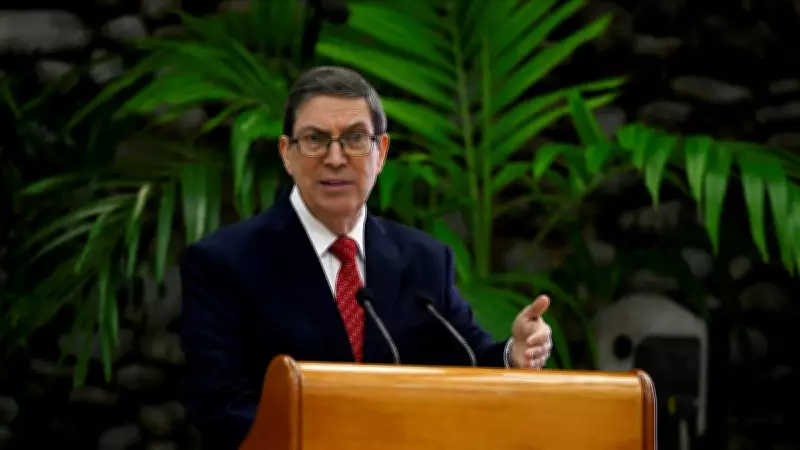
Cuba has publicly declared its readiness to engage in what it terms 'serious and responsible dialogue' with the United States, marking a significant diplomatic overture in the often-tense bilateral relationship. The announcement was made by Cuban Foreign Minister Bruno Rodriguez during the recent summit of the Community of Latin American and Caribbean States (CELAC), a pivotal regional gathering that underscores Cuba's strategic positioning within Latin America.
Diplomatic Gesture at Regional Forum
Rodriguez delivered these remarks at the CELAC summit, a key forum comprising 33 Latin American and Caribbean nations. Notably, this regional bloc explicitly excludes both the United States and Canada, highlighting its focus on intra-regional cooperation and solidarity. By choosing this platform to extend an olive branch to Washington, Cuba is signaling its commitment to dialogue while asserting its independence and regional alliances.
Context of US-Cuba Relations
The call for dialogue comes amid a complex historical backdrop of strained relations between the two nations, characterized by decades of political friction and economic sanctions. Cuba's emphasis on 'serious and responsible' terms suggests a desire for substantive negotiations that address core issues, rather than superficial exchanges. This move could potentially pave the way for renewed talks on matters such as trade, migration, and human rights, which have long been points of contention.

Implications for Regional Dynamics
By making this statement at CELAC, Cuba is also leveraging regional support to bolster its diplomatic stance. The summit serves as a collective voice for Latin American and Caribbean countries, many of which have advocated for normalized relations between Havana and Washington. This development may influence broader regional policies and encourage other nations to mediate or support the dialogue process.
As of March 22, 2026, the international community is closely monitoring responses from the United States, which has yet to issue an official reaction. Observers note that such diplomatic initiatives could reshape geopolitical alignments in the Western Hemisphere, depending on the willingness of both parties to engage constructively.






