

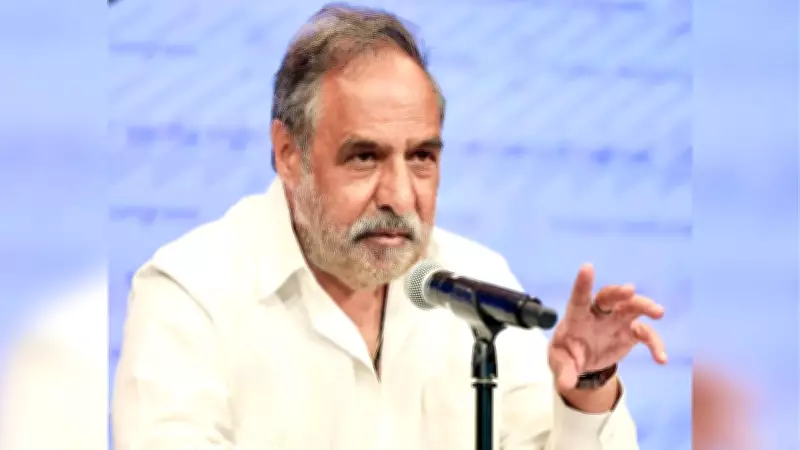
Congress Leader Anand Sharma Applauds India's Diplomatic Approach to West Asia Crisis
In a notable departure from the official Congress party position, senior leader and former commerce minister Anand Sharma has publicly praised India's diplomatic handling of the escalating West Asia crisis. Sharma described the government's approach as "mature and skilful", emphasizing that it has successfully navigated the country away from "potential minefields" in the volatile region.
Balancing Act in Diplomacy
Speaking to ANI, Sharma elaborated on India's neutral stance, stating, "We are balancing it correctly. There is no other way. We can't lean. We can't tilt. That is what is called skilful diplomacy, that everybody is okay with you, and we have to keep this continued so the Indian diaspora is safe." His comments highlight the delicate diplomatic tightrope India is walking amid tensions between Iran and Gulf countries.
This perspective places Sharma alongside colleague Shashi Tharoor, creating an internal divergence within the Congress party. The party's official stance has been that India supported Iran, but Sharma's remarks underscore a more nuanced view aligned with the government's argument for neutrality.

Protecting the Indian Diaspora
The government has consistently maintained that India's neutral position is crucial for the safety of approximately nine lakh Indian nationals working in Gulf countries, which have been targeted by Iran. Sharma strongly endorsed this rationale, praising Indian diplomats stationed in the region for their efforts.
"We have to support them. They are holding the Tricolour aloft. They are working for our people," Sharma emphasized, acknowledging the challenging circumstances faced by diplomatic personnel protecting Indian citizens abroad.
Call for Global South Leadership
Beyond immediate crisis management, Sharma urged India to take a proactive leadership role in mobilizing the Global South and strategic partner countries. He advocated for collective international efforts toward restoring peace and order in West Asia, recognizing the broader geopolitical implications of the conflict.
The former commerce minister also highlighted the economic dimensions of the crisis, noting that India and other nations dependent on energy imports from the region face "one of the worst energy crises in history." With India importing substantial quantities of crude petroleum, LPG, and natural gas from West Asia, the stability of the region directly impacts national energy security and economic stability.
Emphasis on National Unity
Concluding his remarks, Sharma stressed the importance of sustained national dialogue and unity. "This national dialogue must be sustained. National unity and a mature response guided by national interest are the need of the hour," he asserted, framing the diplomatic challenge as requiring bipartisan cooperation and strategic foresight.
Sharma's comments represent a significant intervention in the political discourse surrounding India's foreign policy, bridging partisan divides to focus on what he characterizes as skillful diplomacy protecting both Indian citizens abroad and the nation's strategic interests during a period of international uncertainty.






