

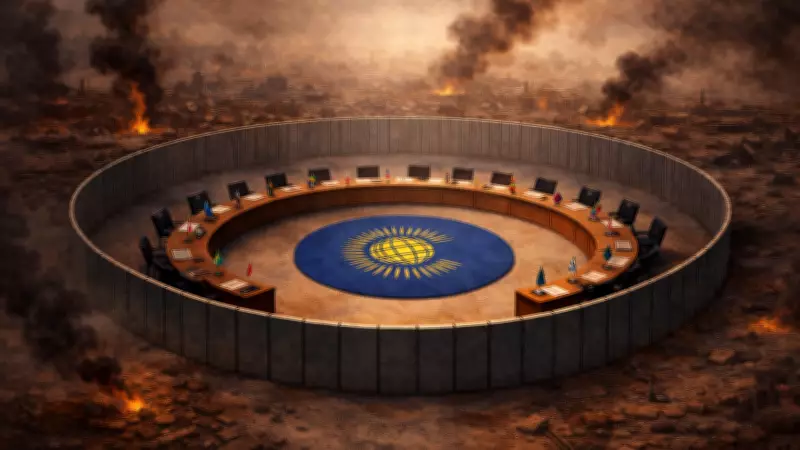
The Commonwealth's Diplomatic Dilemma: Navigating Wars Without Taking Sides
The Commonwealth of Nations, a voluntary association of 56 independent countries, most of which are former territories of the British Empire, has long been observed for its cautious approach to international conflicts. Despite comprising nations directly involved in or affected by various wars, the organization frequently avoids issuing public statements or taking definitive stances on such matters. This diplomatic neutrality raises questions about its role and effectiveness in global affairs, particularly when member states face existential threats.
Historical Foundations and Structural Constraints
The Commonwealth's origins trace back to the British Empire's gradual decolonization in the 20th century, with its modern form established by the London Declaration in 1949. From its inception, the organization was designed as a forum for cooperation and dialogue rather than a military or political alliance. Its charter emphasizes principles such as democracy, human rights, and the rule of law, but it lacks binding mechanisms for enforcement or collective security. This structural limitation inherently discourages the Commonwealth from intervening in wars, as it operates on a consensus-based model where all members must agree on actions—a challenging feat given the diverse interests and geopolitical alignments within the group.
The Consensus-Based Governance Model
At the heart of the Commonwealth's avoidance of war stances is its governance structure, which requires unanimous or near-unanimous agreement among member states for any significant decision. With members ranging from large economies like India and the United Kingdom to small island nations, achieving consensus on contentious issues like wars is often impractical. For instance, conflicts involving member states may see other members with opposing alliances or economic ties, leading to deadlock in discussions. This model prioritizes harmony and inclusivity over decisive action, effectively sidelining the organization from taking public positions that could alienate factions within its ranks.

- Diverse Membership: The Commonwealth includes countries with varied political systems, cultural backgrounds, and international allegiances, making unified stances on wars difficult to forge.
- Focus on Soft Power: The organization emphasizes non-military tools such as diplomacy, development aid, and cultural exchanges, steering clear of hard power interventions like sanctions or military support.
- Historical Precedents: Past instances, such as the Rwandan Genocide or the Falklands War, where the Commonwealth remained largely silent, have set a pattern of neutrality in conflicts affecting members.
Case Studies: Conflicts and Commonwealth Inaction
Several historical and contemporary examples illustrate the Commonwealth's reluctance to engage in wars involving its members. During the India-Pakistan wars, for instance, the organization maintained a neutral stance, focusing instead on mediation efforts behind the scenes. Similarly, in more recent conflicts like the civil war in Sri Lanka, the Commonwealth limited its role to promoting human rights and reconciliation without taking sides. This approach contrasts with other international bodies like the United Nations or NATO, which may impose sanctions or authorize military action. Critics argue that this inaction undermines the Commonwealth's moral authority, especially when human rights abuses occur in member states.
Implications for Global Diplomacy and Member States
The Commonwealth's avoidance of war stances has significant implications for its relevance in international diplomacy. On one hand, it allows the organization to maintain a neutral platform for dialogue, potentially facilitating peace talks and conflict resolution informally. On the other hand, it risks being perceived as ineffective or indifferent during crises, eroding trust among member states and the global community. For nations embroiled in conflicts, this neutrality can mean a lack of institutional support, forcing them to rely on bilateral alliances or other multilateral forums for assistance.

- Reforming Decision-Making: Some analysts suggest introducing weighted voting or majority-based systems to enable more responsive actions, though this could threaten the Commonwealth's inclusive nature.
- Enhancing Soft Power Initiatives: Strengthening programs in areas like education, trade, and climate change may bolster the Commonwealth's influence without venturing into military domains.
- Balancing Principles and Pragmatism: The organization faces ongoing pressure to uphold its stated values while navigating the complex realities of international politics and member sovereignty.
In conclusion, the Commonwealth of Nations' tendency to avoid taking stands on wars affecting its members stems from a combination of historical design, structural constraints, and diplomatic pragmatism. While this neutrality helps preserve unity among diverse nations, it also poses challenges to its role as a meaningful actor in global conflict resolution. As international dynamics evolve, the Commonwealth may need to reassess its approach to balance its foundational principles with the urgent needs of its member states in times of war.





