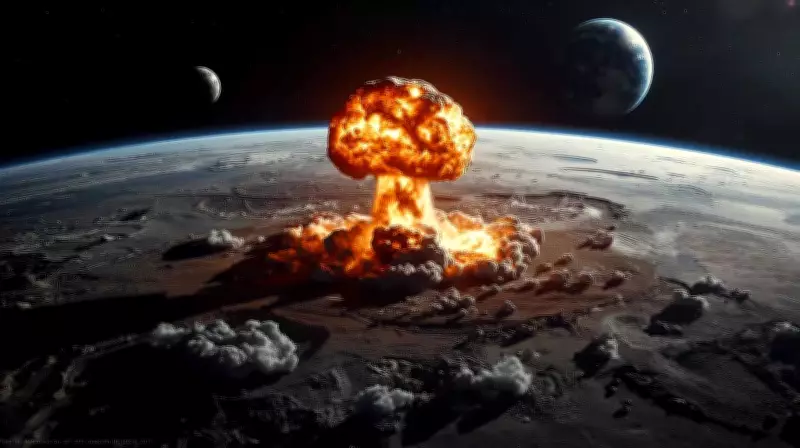
The Secret Cold War Plan to Detonate a Nuclear Bomb on the Moon
In 1958, as Cold War tensions between the United States and the Soviet Union reached a fever pitch, a classified study quietly examined a radical proposal: exploding a nuclear device on the Moon. Known as Project A119, this audacious plan never moved beyond the conceptual stage, but it starkly reflected the climate of urgency and competition that defined the early space race.
Political Context and Soviet Advances
The launch of Sputnik 1 by the Soviet Union in 1957 sent shockwaves through Washington, suggesting advanced Soviet rocket capabilities. In response, U.S. officials scrambled for bold demonstrations of technological prowess. The Moon, visible and symbolically powerful, became a potential stage for such a show of force. Project A119 was born from this context, with the U.S. Air Force directing the study and a small scientific team providing input.
Officials weighed scientific opportunity against political signaling. Some believed a lunar detonation would prove American reach beyond Earth's atmosphere, while others questioned the costs and diplomatic ramifications. A failed launch carrying a nuclear device posed severe technical and containment risks, adding to the unease from the outset.

Scientific Aims and Military Considerations
The project assessed whether a hydrogen bomb could be delivered to the lunar surface and if the flash would be visible from Earth. Beyond symbolism, the internal report explored potential scientific returns:
- Seismic effects and magnetic field changes from a blast
- Behavior of plasma and possible organic material on the Moon
- Data collection via instrument packages placed before any explosion
Researchers proposed experiments that could be observed from Earth, with some not requiring a nuclear device at all. The plan did not involve a military target; instead, the objective was demonstration and gathering data on space phenomena.
Ethical Concerns and Project Termination
As the study progressed, ethical and environmental questions grew stronger. Scientists raised concerns about contamination, radiation, and the broader impact on future space research. Turning the Moon into a nuclear testing ground troubled many, leading to the project's termination without implementation.
Project A119 remained classified for decades before details emerged through archival research and academic accounts of Cold War space policy. It now stands as a measured example of how far superpower competition once extended—and how close space came to becoming a dangerous proving ground.