Iranian Ambassador Praises Chabahar Port as Keystone of India-Iran Ties
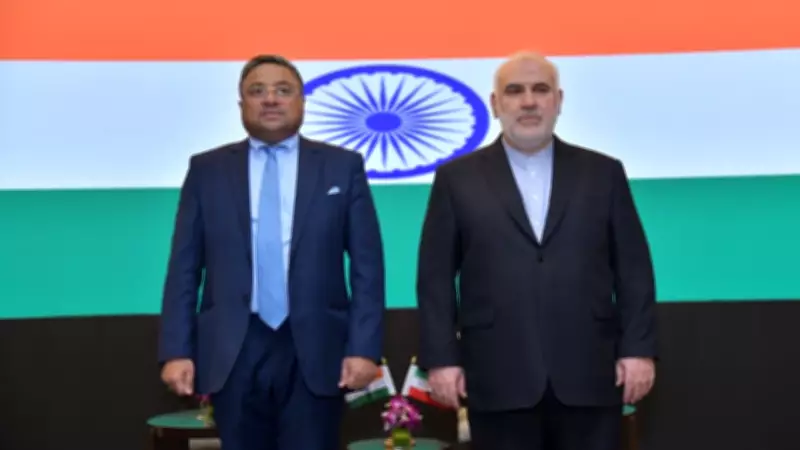
In a significant diplomatic address, Iran's ambassador to India, Mohammad Fathali, has lauded the Chabahar Port project as a powerful emblem of the robust partnership between India and Iran. Speaking at a reception hosted by the Iranian Embassy in New Delhi to commemorate Iranian National Day, Ambassador Fathali underscored the port's pivotal role in fostering common development and enhancing regional connectivity across South Asia and beyond.
Deep-Rooted Historical and Civilizational Bonds
Ambassador Fathali highlighted that the relations between Iran and India are deeply anchored in thousands of years of shared history and civilization. He emphasized that this enduring cultural connection forms a solid foundation for expanding bilateral cooperation in various sectors. "Relations between Iran and India are rooted in thousands of years of shared history and civilization and based on common culture," the envoy stated, as reported by news agency ANI. "This rich heritage is a valuable asset for expanding bilateral cooperation."
He further elaborated that the Chabahar Port project, as a symbol of this cooperation, plays an instrumental role in promoting mutual development and strengthening regional links, thereby benefiting both nations and their neighbors.

India Reaffirms Commitment to Strengthening Bilateral Relations
Representing India as the Chief Guest at the reception, Secretary (West) in the Ministry of External Affairs, Sibi George, conveyed warm congratulations to the government and people of Iran. He reaffirmed India's steadfast commitment to bolstering bilateral ties, emphasizing the enduring nature of the relationship between the two countries.
In a post on social media platform X, the Ministry of External Affairs noted, "Secretary (West) Sibi George represented India as the Chief Guest at the Iranian National Day reception hosted by @Iran_in_India. He conveyed warm congratulations to the Government and people of Iran and reaffirmed India's enduring commitment to bilateral ties." This gesture underscores the diplomatic importance both nations place on maintaining and enhancing their strategic partnership.
Strategic Significance of Chabahar Port
The Chabahar Port project, first proposed by India in 2003, aims to create an alternative trade route for Indian goods to reach landlocked Afghanistan and Central Asia. This initiative is part of the broader International North-South Transport Corridor, which utilizes road and rail links to bypass Pakistan, thereby enhancing India's access to key markets and regions.
Progress on the project had previously faced challenges due to US sanctions on Iran related to its suspected nuclear program. However, to operationalize India's involvement, a long-term agreement was later signed between Indian Ports Global Limited and Iran's Port and Maritime Organisation. This pact replaced the initial 2016 agreement, which had been extended annually, marking a significant step forward in the project's implementation.
In recent years, Chabahar Port has demonstrated its utility through critical consignments, including the shipment of 20,000 tonnes of wheat assistance to Afghanistan in 2023. This highlights its growing role as a vital hub for humanitarian aid and trade facilitation in the region.
Future Prospects and Regional Impact
The emphasis on Chabahar Port by both Iranian and Indian officials signals a mutual recognition of its strategic value. As a symbol of cooperation, the port not only enhances bilateral economic ties but also contributes to regional stability and connectivity. By providing an alternative route, it reduces dependency on traditional pathways and opens new avenues for trade and development.
Looking ahead, the continued collaboration on Chabahar Port is expected to deepen the India-Iran partnership, leveraging their historical bonds to address contemporary challenges and opportunities. This project stands as a testament to how shared heritage can translate into tangible benefits for regional prosperity and diplomatic engagement.