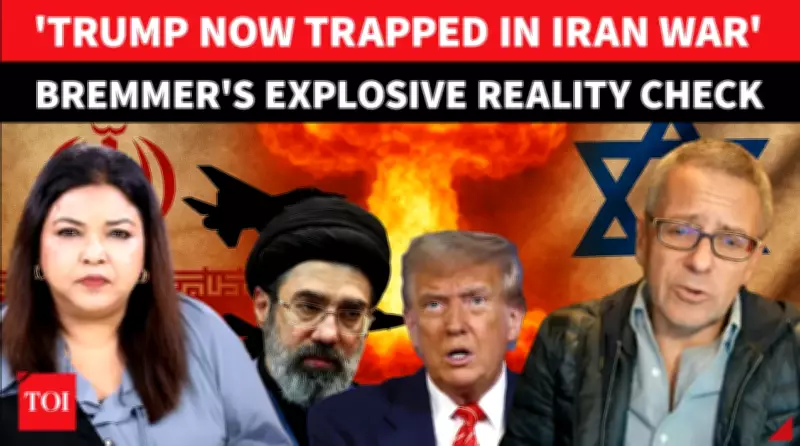
Ian Bremmer Issues Blunt Warning to Trump on Iran War: 'Biggest Foreign Policy Mistake'
In a candid and forceful interview, Ian Bremmer, President of the geopolitical risk consultancy Eurasia Group, has delivered a brutal assessment of the ongoing US-Iran war, labeling it as former President Donald Trump's most significant foreign policy error across both of his administrations. Bremmer argues that the goal of regime change in Tehran was never a realistic or achievable objective, and he warns that Trump now owns the consequences of attacks on allied nations.
A Stark Geopolitical Assessment
Bremmer's analysis highlights that the political goals of the conflict remain completely unmet, with no substantial progress toward destabilizing the Iranian government. He emphasizes that the strategic miscalculation has led to increased regional instability and economic strain. The warning comes as a direct message to Trump, suggesting that the former president must reconsider his stance or face deepening repercussions.
The Economic and Electoral Fallout
The Eurasia Group leader points out that the war has triggered significant economic damage, affecting global oil markets and increasing defense expenditures. Bremmer warns that if the conflict continues unabated, it could exacerbate electoral challenges for political figures associated with the war effort. He stresses that the economic toll is already being felt, and further escalation would only magnify these issues.

Best-Case Scenario: A Limited Victory Declaration
According to Bremmer, the optimal path forward is a swift declaration of a limited victory, allowing the United States to extricate itself from the conflict before the situation deteriorates further. This approach, he argues, would help mitigate both the economic impact and the political fallout. However, he cautions that this requires immediate action and a willingness to de-escalate tensions.
Broader Implications for US Foreign Policy
Bremmer's warning extends beyond the immediate conflict, serving as a critique of US foreign policy strategies under Trump. He suggests that the Iran war exemplifies a pattern of overreach and unrealistic objectives that have plagued American diplomacy. The interview underscores the need for a more pragmatic and measured approach to international relations, particularly in volatile regions like the Middle East.
In summary, Ian Bremmer's blunt assessment serves as a critical wake-up call, urging a reevaluation of the US-Iran war strategy to avoid further economic and electoral damage. His insights highlight the complexities of geopolitical risk and the importance of strategic foresight in foreign policy decisions.