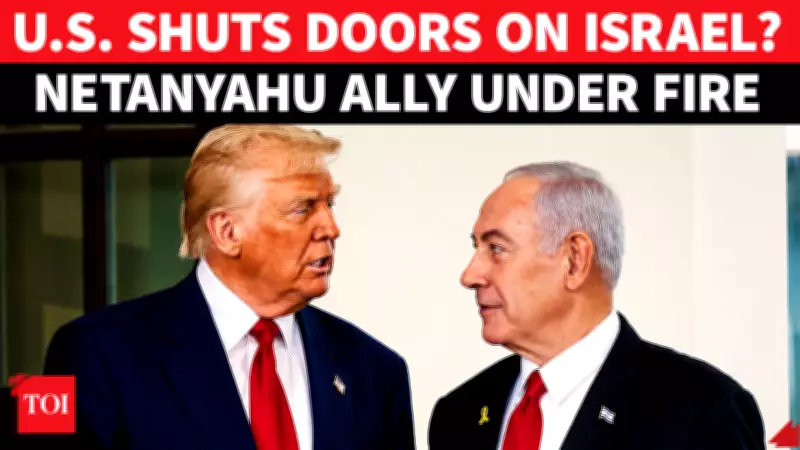
Did Washington quietly snub one of Israel's most controversial ministers? Israel's National Security Minister Itamar Ben-Gvir canceled his planned US visit after facing unexpected visa hurdles, including a fingerprint requirement reportedly linked to his criminal record. The episode has fueled speculation about tensions between Washington and Israel's far-right leadership. Here's what happened and why the canceled trip is making headlines.
Background of the Cancelled Trip
Itamar Ben-Gvir, a key ally of Prime Minister Benjamin Netanyahu, had scheduled a trip to Miami for a speaking engagement. However, the visit was abruptly canceled after Ben-Gvir encountered difficulties obtaining a US visa. According to reports, the visa application process included a fingerprint requirement that was tied to his criminal record, which includes past convictions for incitement and supporting a terrorist organization.
The Visa Hurdle
The US Embassy in Israel reportedly requested Ben-Gvir to provide fingerprints as part of the visa application, a standard procedure for individuals with certain criminal histories. Ben-Gvir viewed this as a deliberate slight, given his high-profile position. His office stated that the minister decided to cancel the trip rather than comply with what they considered an unnecessary and humiliating requirement.

Political Implications
The incident has sparked debate about the state of US-Israel relations under the current far-right coalition government. Critics argue that the Biden administration is sending a message of disapproval by making visa processes difficult for controversial figures. Supporters of Ben-Gvir claim this is an attempt to undermine Israel's sovereignty and its democratically elected leaders.
Ben-Gvir's Response
In a statement, Ben-Gvir accused the US of trying to interfere in Israeli internal affairs. He emphasized that he would not bow to what he called 'American dictates.' Netanyahu has not commented directly on the matter, but his office expressed solidarity with Ben-Gvir, calling the visa issue an unnecessary complication in bilateral relations.
Reactions from Washington
The US State Department has not officially commented on the specifics of Ben-Gvir's visa application, citing privacy laws. However, officials have reiterated that visa decisions are made on a case-by-case basis and are not politically motivated. This has done little to quell speculation that the visa hurdle was a deliberate snub.
Media and Public Reaction
The news has dominated Israeli media, with commentators divided along political lines. Right-wing outlets portray it as a diplomatic affront, while left-leaning media suggest it reflects the international community's discomfort with Ben-Gvir's extremist views. The story has also gained traction internationally, highlighting the growing rift between Israel's far-right government and Western allies.
Looking Ahead
The cancellation of Ben-Gvir's trip may have broader implications for US-Israel relations. As the Israeli government pushes ahead with controversial policies, including judicial reform and settlement expansion, tensions with Washington could escalate. Ben-Gvir's visa issue might be just the tip of the iceberg in a deteriorating relationship.
Meanwhile, Ben-Gvir has vowed to continue his work without US support, stating that Israel does not need American approval to ensure its security. The episode serves as a reminder of the delicate balance between diplomatic protocol and political ideology in international relations.