Beijing's Veiled Dig at US: India and China's Growth Built on Hard Work, Not Generosity
In a pointed diplomatic statement, Chinese Ambassador Xu Feihong emphasized that the remarkable development of India and China over recent decades is a result of their own hard work and wisdom, rather than the generosity of external powers. This remark is widely interpreted as a direct rebuttal to recent comments from US Deputy Secretary of State Christopher Landau, who labeled past US economic support for China as a "mistake."
Ambassador Xu's Firm Rejection of External Claims
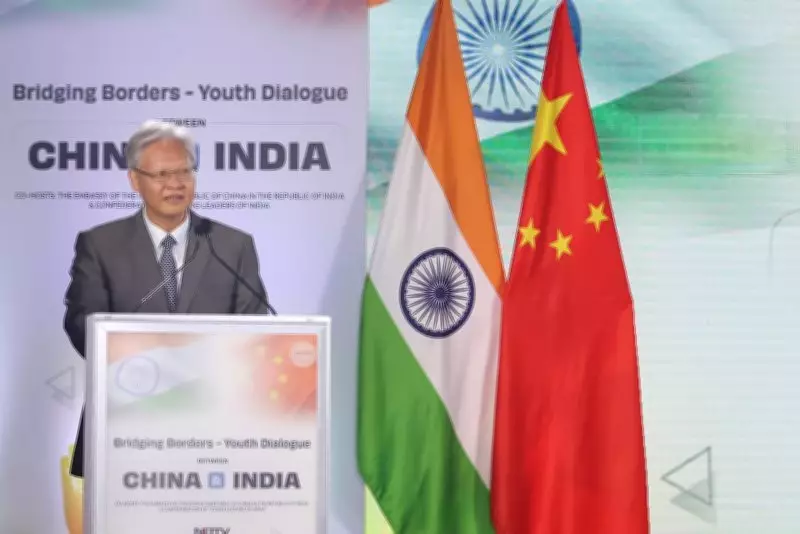
Speaking at the 14th China-India Youth Dialogue in New Delhi, Ambassador Xu argued that the achievements of both nations are built on the diligent efforts of their people and supported by global cooperation. He stated, "In recent decades, both China and India have achieved remarkable development. These achievements are built on the hard work and wisdom of our own people, supported by global cooperation, and are by no means the result of others' generosity." This statement comes amid growing geopolitical tensions, with Xu suggesting that certain elements seek to profit from discord between China and India.
Context of US Remarks and Diplomatic Tensions
The ambassador's comments are seen as a response to US Deputy Secretary of State Christopher Landau's address at the Raisina Dialogue earlier this month. Landau indicated that the United States would not repeat the error of providing India with the same economic advantages it once extended to China, which he claimed helped Beijing become a key competitor to the US. Xu countered this by highlighting the independent paths of development taken by both Asian giants.

Call for Harmony and Cooperation Between Neighbors
Xu stressed the importance of China and India maintaining good-neighborly relations, referring to the concept of the "Dragon-Elephant Tango" to symbolize their partnership. He warned against external forces that might attempt to disrupt this harmony, saying, "However, some people are unwilling to see China and India live in harmony. They deliberately amplify our differences, hype up the so-called 'China threat', and hope to profit from discord between our two countries." He urged young people to think independently and avoid falling into "information cocoons" in today's complex global landscape.
Global Significance of China-India Relations
The ambassador underscored that the relationship between China and India, as the world's two largest developing countries, holds significant global and strategic importance. He noted positive progress since meetings between President Xi Jinping and Prime Minister Narendra Modi, with relations moving from a reset to a new level of improvement. Xu called for strengthened communication and coordination to safeguard the rights of developing countries and promote the development of the Global South.
Advocacy for Eastern Wisdom and International Order
In his concluding remarks, Xu advocated for the promotion of "Eastern wisdom," emphasizing peaceful coexistence and mutual learning to prevent a return to a law-of-the-jungle mentality in international affairs. He highlighted the need for both nations to work together against rising unilateralism, protectionism, and hegemonism, which he argued undermine the existing international order.