Bangladesh President Levels Serious Constitutional Allegations Against Former Chief Adviser
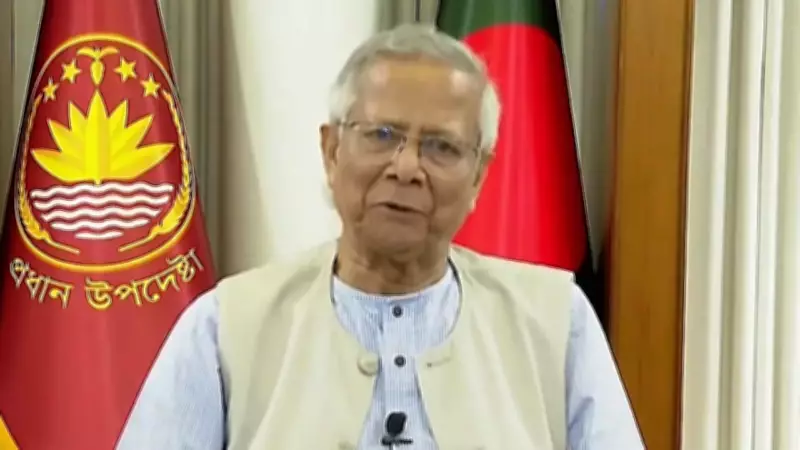
In a revealing interview with the Bangla daily Kaler Kantho, Bangladesh President Mohammed Shahabuddin has made explosive accusations against former chief adviser Muhammad Yunus, alleging significant constitutional lapses and attempts to destabilize both the country and the presidency during the interim government period.
Constitutional Communication Failures
President Shahabuddin detailed how Yunus, who served as chief adviser, failed to maintain constitutionally mandated communication protocols. "The chief adviser did not follow any provision of the constitution," Shahabuddin stated emphatically. "Whenever he went abroad, he was supposed to meet the president after returning and inform me in writing about the outcomes. He travelled abroad 14 to 15 times, but not once did he inform me. He never came to see me."
The president described being kept "completely in the dark" during this period and revealed that two of his planned diplomatic visits, to Kosovo and Qatar, were deliberately blocked. Regarding the political climate, he added, "In that situation, I did not receive any phone call from Dr Yunus. He was neither in favour of me nor against me. Of course, I also did not make any request to him seeking help."

Alleged Attempts at Removal and Constitutional Crisis
Shahabuddin made startling claims about attempts to remove him from office following the 2024 mass uprising. "At one point, even a conspiracy was made to bring a former chief justice and seat him in my place through unconstitutional means," he alleged, noting that the judge declined the proposal citing constitutional constraints.
The president vividly described the October 22, 2024 protests outside Bangabhaban as a "terrifying night" when mobs attempted to loot the presidential residence. He credited military deployment with bringing the situation under control and revealed that armed forces leadership expressed strong support for constitutional continuity.
"You are the supreme commander of the armed forces. Your defeat means the defeat of the entire armed forces. We will prevent that at any cost," Shahabuddin quoted the three service chiefs as telling him. He also noted that leaders of the Bangladesh Nationalist Party (BNP) supported maintaining constitutional order during this turbulent period.
Deliberate Isolation of Presidential Office
The president further alleged systematic efforts to isolate his office from public communication and state functions. Following a courtesy meeting with newly elected leaders of the Dhaka Reporters Unity, Shahabuddin claimed his entire press wing was withdrawn.
"Very shamelessly, three people, the press secretary, deputy press secretary and assistant press secretary, were withdrawn together," he stated, adding that two long-serving photographers were also removed. "We cannot even issue a simple press release congratulating the national cricket team when they win an international match," he lamented, describing his office as "completely handicapped."
Symbolic Removal from State Functions
Shahabuddin detailed additional measures he interpreted as preparatory steps for his removal. During the interim period, his photographs and messages were excluded from state supplements published on national days. More dramatically, he claimed his portraits were removed from Bangladesh missions worldwide.
"That night, my photos were removed from almost all Bangladesh high commissions and consulates around the world. That incident was essentially an indication or the first step to remove me," he asserted, revealing that he later lodged a formal written protest with the foreign ministry regarding these actions.
Despite what he characterized as "humiliating situations," President Shahabuddin maintained that he remained steadfast in his commitment to ensuring constitutional continuity throughout the challenging period.