

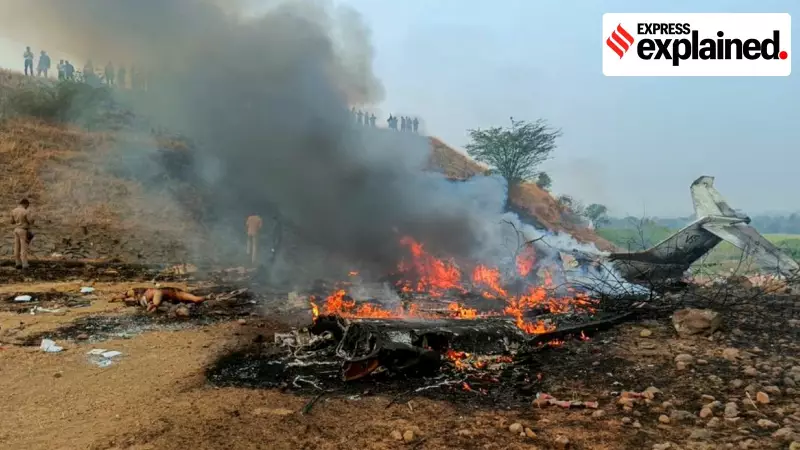
Parliamentary Panel's Warning on Aviation Safety Gaps Before Ajit Pawar Crash
Months before the tragic plane crash that claimed the life of Maharashtra Deputy Chief Minister Ajit Pawar in Baramati, Pune, a Parliamentary Standing Committee had issued a stark warning about critical deficiencies in India's civil aviation safety framework. The committee, chaired by JD(U) MP Sanjay Jha, emphasized that the country's rapid expansion as one of the world's fastest-growing aviation markets must be accompanied by an equal, if not greater, emphasis on safety to prevent such disasters.
Private and Charter Aircraft Under Scrutiny
The committee's report, which was tabled in Parliament in August of the previous year, specifically highlighted the risks associated with the burgeoning private and charter aircraft segment. It drew a clear distinction between the highly standardized systems followed by scheduled commercial airlines and the uneven compliance environment in private flying. The panel observed that while corporate jets and charter services have expanded rapidly, safety oversight mechanisms have not kept pace with this growth, creating significant vulnerabilities in supervision and enforcement.
Key concerns raised by the committee include:

- Maintenance standards and documentation discipline among non-scheduled operators.
- Lean technical and safety teams in some charter operations, affecting maintenance scheduling.
- Inadequate operational control structures, particularly during adverse weather or diversions.
The report stressed the urgent need for the Directorate General of Civil Aviation (DGCA) to intensify surveillance through surprise inspections and stricter audit cycles. It also called for mandatory and fully functional Safety Management Systems (SMS) across all private operators, ensuring that safety processes in the charter segment are on par with those of scheduled carriers.
Systemic Stress on Regulatory Bodies
Beyond the private aviation sector, the committee painted a broader picture of systemic stress within India's aviation regulatory framework. It noted that the DGCA remains overburdened and often operates in a reactive mode due to severe manpower shortages and expanding responsibilities. The panel recommended several measures to address these issues:
- Strengthening technical staffing and improving training programs.
- Implementing data-driven risk assessment tools for predictive oversight.
- Ensuring that rapid fleet growth and new airport developments are matched with parallel strengthening of safety surveillance.
The committee warned that without these enhancements, the margin for error in aviation operations would continue to narrow, increasing the risk of accidents.
Air Traffic Control Challenges and Fatigue Risks
The report also brought Air Traffic Control (ATC) infrastructure and manpower under pointed scrutiny. Describing ATC as the backbone of aviation safety, the committee highlighted that controllers at busy airports are handling dense traffic loads without proportionate increases in staffing. This has led to significant concerns about fatigue and workload stress, particularly during peak hours or adverse weather conditions, which can heighten the risk of human error.
To mitigate these risks, the panel called for:
- Accelerated recruitment of ATC personnel.
- Improved rostering practices to prevent fatigue.
- Faster modernization of communication, navigation, and surveillance systems.
- Enhanced system redundancy and smoother coordination between civil and defence airspace.
Learning from Past Accidents and Infrastructure Upgrades
Referring to previous aviation accidents, the committee noted that investigation findings repeatedly point to human factors, training quality, and decision-making under pressure. It stressed that safety recommendations from probe reports must be tracked and implemented effectively, rather than remaining on paper. The panel suggested establishing a centralized monitoring mechanism to ensure compliance with safety advisories.

Additionally, the report emphasized the need for infrastructure upgrades at smaller airports, particularly those under regional connectivity schemes. It highlighted that runway safety areas, navigational aids, and emergency response capabilities must be enhanced alongside traffic growth to maintain safety standards.
A Final Warning on Growth Versus Safety
In its concluding remarks, the Sanjay Jha-led committee issued a clear warning: India's aviation growth must not come at the expense of safety. The panel underscored that expansion without parallel strengthening of oversight, ATC systems, and operator discipline—especially in the private aviation sector—significantly increases systemic risk. This report serves as a critical reminder of the urgent need to prioritize safety measures as India continues its rapid ascent in the global aviation market.





