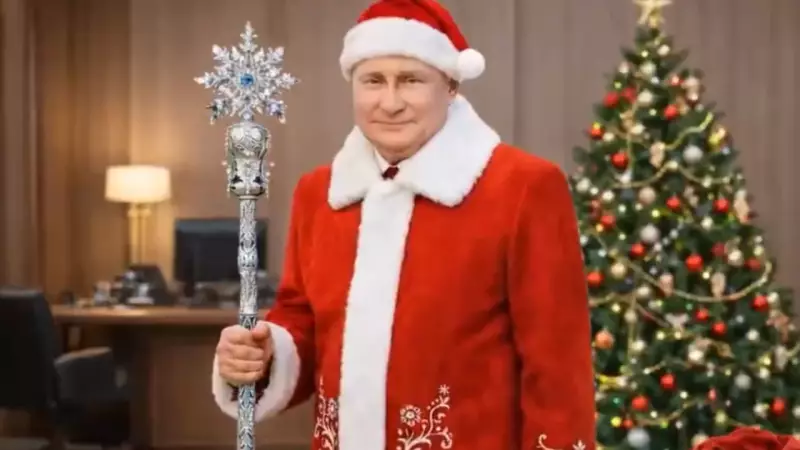
An artificial intelligence-generated video shared by the Russian Embassy in Kenya has sparked widespread attention across social media platforms. The clip features Russian President Vladimir Putin dressed in a Santa Claus costume, distributing symbolic Christmas presents to various global leaders. Each gift carries a distinct geopolitical message, reflecting Moscow's view of current international alliances, rivalries, and shifting power dynamics.
Decoding the Symbolic Gifts to Major Powers
The festive video begins with Putin, in his Santa attire, approaching a lavishly decorated Christmas tree laden with gifts. The carefully chosen presents for each leader tell a story of Russia's foreign policy priorities and relationships.
For Chinese President Xi Jinping, the visual narrative focuses on economic alignment. The video shows ornaments representing the Chinese yuan and the Russian ruble being hung together on the tree. Subsequently, a dollar-shaped ornament is seen falling and shattering on the ground. This imagery strongly suggests the growing partnership between Moscow and Beijing in their concerted push for de-dollarisation—reducing global reliance on the US dollar.

This symbolism aligns with recent economic reports. According to the Moscow Times, the Russian ruble has become one of the world's best-performing currencies, supported by strict capital controls, high interest rates, and reduced demand for foreign currencies due to Western sanctions. Data from Russia's Central Bank indicates the ruble now facilitates over half of the country's export and import payments, while the use of Western currencies has plummeted to record lows.
Strategic Messages for India, US, and Others
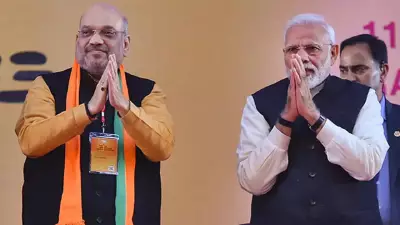
The video's segment directed at India highlights the enduring defence partnership. For Prime Minister Narendra Modi, Putin is shown gifting a miniature model of the Sukhoi Su-57 stealth fighter jet. This comes at a time when discussions about India's future fighter aircraft requirements are active. Russian defence officials have reportedly offered extensive technology transfer for the Su-57, including engines, radar, and stealth technology, with potential for manufacturing the aircraft within India.
For the United States, the gift to President Donald Trump is a framed image recalling their high-profile meeting earlier this year. The reference is to the peace summit in Alaska, which featured a dramatic flypast of US F-35 jets and a B-2 stealth bomber. While Trump termed the talks "productive," no concrete deal on Ukraine emerged, and Russian officials have since stated the momentum has faded.
Other notable gifts include:
- Turkey: A snow globe labelled "Akkuyu" for President Recep Tayyip Erdoğan, referencing Turkey's first nuclear power plant being built by Russia's Rosatom, with recent additional Russian financing.
- North Korea: A sword with a note reading "From Russia with gratitude" for Kim Jong Un, recalling their 2019 meeting and symbolising deepened military and political ties against Western influence.
Provocative Imagery and Lasting Implications
The most controversial segment involves Ukraine. President Volodymyr Zelenskyy is depicted receiving handcuffs and shown behind bars, a stark reference to the ongoing war nearing its fourth year. This reinforces Moscow's hardline stance, having previously placed Zelenskyy on a wanted list—a move Kyiv dismisses as propaganda. The AP news agency reported this imagery aligns with the Kremlin's continued framing of the invasion as a "special military operation."
The video concludes with a panoramic view of a city aglow with Christmas lights. The production, while festive on the surface, serves as a sophisticated piece of digital diplomacy, using AI-generated content to broadcast Russia's geopolitical narrative directly to a global audience. It underscores how nations are increasingly leveraging new technologies to craft and disseminate their strategic messages, blending symbolism with statecraft in the digital age.