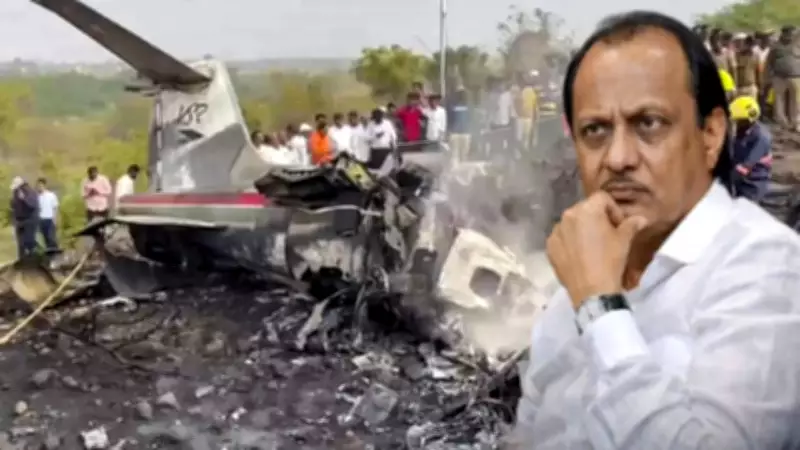
AAIB Preliminary Report on Baramati Learjet Crash Highlights Critical Safety Lapses
The Aircraft Accident Investigation Bureau (AAIB) released its preliminary report on Saturday concerning the fatal Learjet 45XR crash at Baramati on January 28, which tragically claimed the lives of all five individuals on board. Among the deceased was the then Maharashtra deputy chief minister Ajit Pawar. The report underscores significant issues including low visibility conditions, the absence of basic meteorological facilities, and operational deficiencies at the uncontrolled airfield.
Details of the Fatal Incident and Flight Operations
The aircraft, registered as VT-SSK and operated by VSR Ventures Pvt. Ltd., was conducting a non-scheduled passenger flight from Mumbai to Baramati. The accident occurred at approximately 0846 IST during the landing phase. On board were two pilots, one cabin attendant, and two passengers. The jet made its first approach to runway 11 but executed a go-around. During the second approach, the crew reported having the field in sight and received clearance to land.
Subsequently, the aircraft transmitted an unclear message, "Oh st... Oh st...," before crash-landing to the left of runway 11, aligned with the threshold. It struck trees and terrain about 50 metres from the runway edge and was rapidly engulfed in fire, resulting in the complete destruction of the cockpit and cabin.

Weather and Infrastructure Deficiencies at Baramati Airfield
The report reveals that Baramati airfield lacks a dedicated meteorological (MET) facility. Weather parameters such as wind, temperature, and QNH are communicated from a temporary tower using available instruments, while visibility is assessed through visual markers identified by flying training organizations. On the morning of the accident, the tower estimated visibility at approximately 3,000 metres, which was below the minimum requirement of 5 kilometres for Visual Flight Rules (VFR) operations.
METAR data from Pune indicated visibility ranging between 2,000 and 2,500 metres during the relevant time window, further corroborating the adverse conditions. These findings point to a critical gap in weather monitoring and reporting at the airfield.
Investigation Progress and Interim Safety Recommendations
The solid-state flight data recorder has been successfully downloaded, while the cockpit voice recorder, which sustained thermal damage, will undergo analysis with assistance from the US National Transportation Safety Board and the aircraft manufacturer. The investigation remains ongoing.
In its interim safety recommendations, the AAIB has urged the Directorate General of Civil Aviation (DGCA) to take several measures:
- Strict Adherence to Procedures: Issue directions to all operators conducting VFR flights at uncontrolled airfields to strictly follow established standard operating procedures.
- Enhanced Safety Standards: Direct aerodrome operators and organizations managing uncontrolled airfields to ensure flying operations, including non-scheduled, private, and charter flights, are permitted only when meteorological conditions meet DGCA regulations.
- Infrastructure Improvements: Take necessary steps to enhance landing aids and install basic MET facilities at these airports to accommodate the increasing number of non-scheduled and chartered flights, including VIP movements, alongside flying training activities.
- Licensing Feasibility: Assess the feasibility of licensing these aerodromes to enable safe and regulated flying operations.
These recommendations aim to address the systemic issues identified in the report and prevent similar tragedies in the future.