There is a place in southern Africa where the earth seems to breathe, and the sky is filled with the sound of perpetual thunder. Long before you see it, you feel its presence—a cool mist in the air and a deep, resonant roar that vibrates through the ground. This is Victoria Falls, one of the world's most awe-inspiring natural wonders, known locally by a name that speaks directly to the senses: Mosi oa Tunya, or 'The Smoke That Thunders'.
The Meaning Behind the Name 'Smoke That Thunders'
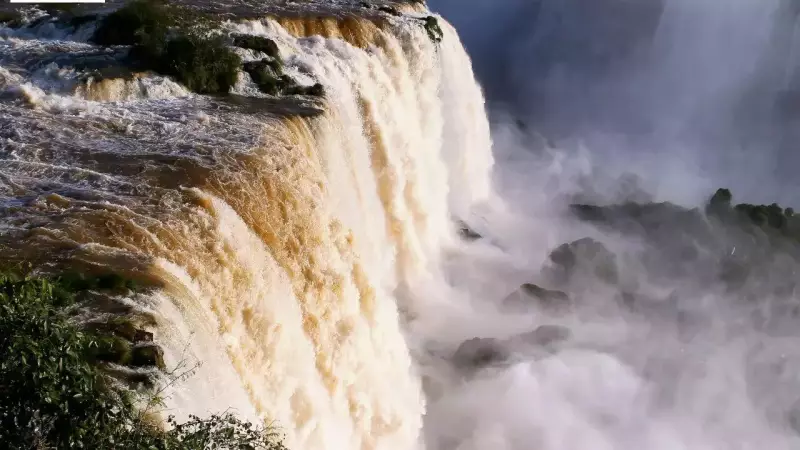
The modern name, Victoria Falls, was given by European explorers. But for generations before them, the people who lived with this majestic waterfall had a far more descriptive title. They called it Mosi oa Tunya. This name isn't a measurement of height or width; it is a direct account of experience. When the mighty Zambezi River plunges over the cliff, it crashes into a narrow gorge with unimaginable force. This impact throws a colossal plume of water spray hundreds of metres into the air. From a distance, this constant spray looks like a massive column of smoke rising from the ground. Simultaneously, the relentless collision of water and rock creates a thunderous roar that rolls across the landscape. The name perfectly captures these two powerful phenomena occurring as one.
How Geography Creates the Spectacle
What makes Victoria Falls produce such dramatic mist and noise? The answer lies in its unique geography. Unlike many tall, narrow waterfalls, Victoria Falls is exceptionally wide—over 1,700 metres across. The river does not fall in separate streams but as a single, uninterrupted curtain of water. This creates a solid wall of water that drops over 100 metres into a very narrow chasm below.

Because the gorge is so tight, the enormous volume of water has nowhere to go. The result is a tremendous impact that forces spray vertically upwards. During the peak flow of the rainy season, this mist can be seen from kilometres away and creates a 'rainforest' in the immediate area, sustained by the perpetual drizzle. The iconic noise, the 'thunder,' is born from this same raw power. The sound does not fade but echoes through the gorge, changing in intensity with the river's seasonal rhythms.
A Natural Border Between Two Nations
Victoria Falls serves as a stunning natural border between two African nations: Zambia and Zimbabwe. On the Zambian side, the town of Livingstone provides access, while on the Zimbabwean side, it is Victoria Falls Town. Each side offers a different perspective. One brings you closer to the heart of the falling water, where you can feel its spray, while the other provides a panoramic view of the entire curtain and the winding gorge. The area surrounding the falls on both sides is protected as national parks, ensuring the preservation of this incredible site and the unique ecosystem the mist supports.
What Sets Victoria Falls Apart
While it may not hold the record for the tallest or the widest waterfall individually, Victoria Falls is renowned for its combination of scale. It is considered the world's largest sheet of falling water. Its environmental impact is also distinctive. The constant spray fosters a lush rainforest that thrives in an otherwise dry region. Visitors are often treated to brilliant rainbows, and on full moon nights, the rare phenomenon of a lunar rainbow or 'moonbow' can appear in the mist.
Ultimately, the power of Victoria Falls is in its relentless, untamed movement. It is not a delicate sight but a visceral experience. It does not whisper; it thunders. It does not merely flow; it erupts into smoke. This is why the ancient name, given by those who witnessed its raw power daily, remains the most fitting description. It is, and will always be, the Smoke That Thunders.