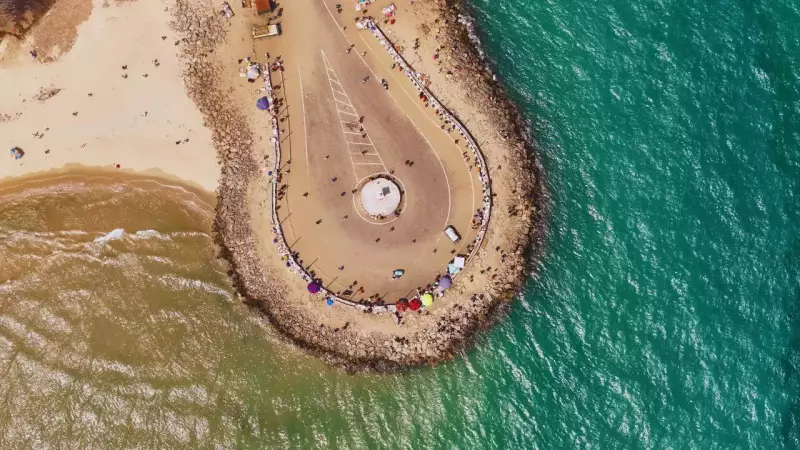
In 2015, I made a simple New Year's resolution: to explore one new destination every year. While some places were ticked off, many remained on a perpetual to-do list, often forgotten in the daily hustle of life and work. As another year drew to a close, I realized my resolution had lain dormant for nearly twelve months. On a whim, I turned to the internet for inspiration, and my search for desolate places led me straight to Dhanushkodi. Defying both my work schedule and India Meteorological Department (IMD) forecasts predicting heavy rain, I booked a ticket to Chennai, determined to embark on a solo road trip to this mysterious ghost town at India's southern edge.
The Scenic Drive Down the Eastern Coastal Road
My journey began on the Eastern Coastal Road (ECR), the breathtakingly scenic route that connects Chennai to Kanyakumari. Leaving behind the chaotic traffic and high-rises of the mega-city, I was greeted by a serene landscape where the sea flanked one side and idyllic villages dotted the other. True to the IMD's warnings, the monsoon rain became a constant, albeit unwelcome, companion. However, the downpour could not dampen the incredible verdancy of Puducherry. The trees were a spectacular shade of green, and though the beaches wore a dark, grey tone, the experience was uniquely atmospheric, fueled by a sense of adventure and a looping soundtrack.
Crossing the Pamban Bridge to Rameshwaram
The stretch from Puducherry to Rameshwaram passed in a sleepy blur, a consequence of long solo travel. A word of advice: consider trains or buses for this leg, as a private taxi can cost around INR 7,000 and the solitude can become tedious. The excitement jolted back to life as we approached the new Pamban Road Bridge (Annai Indira Gandhi Road Bridge). Above, Brahminy kites soared; below, the brilliant blue waters of the Bay of Bengal stretched endlessly. The driver gestured ahead, announcing our arrival in Rameshwaram. The town was a bustling, sandy settlement, a far cry from my childhood memory of just a large temple and a pearl shop. It was also the beloved hometown of Late Dr. APJ Abdul Kalam, India's former President, adding a layer of reverence to its coastal charm.

The Haunting Silence of Dhanushkodi Ghost Town
The final 19-kilometer drive the next morning led to the main destination: Dhanushkodi. This place earned its 'ghost town' label from a tragic history. In December 1964, a catastrophic cyclone completely wiped out this once-bustling town, destroying homes, the railway station, temples, and offices. The Government of Madras subsequently declared it unfit for human habitation. Today, the evidence of that devastation lies scattered: broken walls, remnants of graves, and the skeletal structure of a church, all adorned with dead corals. Hawkers selling fried snacks and seashells are the only signs of commerce amidst the ruins.
Driving straight down the sandy road, you reach Arichal Munai, the point where the Bay of Bengal meets the Gulf of Mannar (Indian Ocean), near the mythical Ram Setu (Adam's Bridge). There are no spectacular attractions here—just powerful winds, salty air, and an overwhelming silence. The feeling is indescribable: a profound sadness for the town's past interwoven with the awe of witnessing a gorgeous sunset over the confluence of two great seas. I stood there on December 23, decades after the disaster, experiencing a rare, nameless peace that only such places of stark beauty and history can offer.
This impulsive trip, sparked by an almost-forgotten resolution, was a powerful reminder that some journeys are less about vibrant destinations and more about the poignant, quiet stories etched in the landscapes we explore.