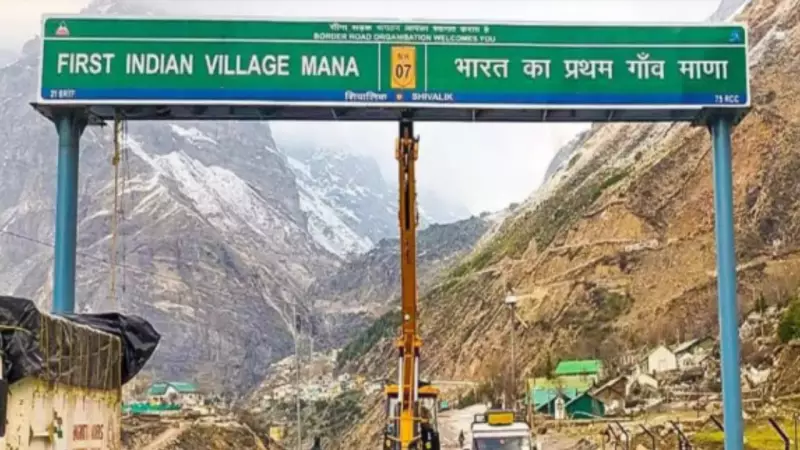
In a significant symbolic shift, a remote Himalayan settlement near the Indo-Tibetan border has transformed its identity. Once famously known as India's Last Village, it now proudly carries the title of India's First Village. This remarkable change reflects a new perspective, viewing the location not as an end point but as a beginning.
A Village Steeped in History and Culture
The village in question is Mana in Uttarakhand's Chamoli district. Perched at an altitude of roughly 3,200 meters, it is primarily home to the Bhotiya community. This indigenous group possesses centuries-old traditions deeply connected to trans-Himalayan trade and a resilient mountain lifestyle.
The village's stone-built houses, narrow pathways, and seasonal rhythms offer a glimpse into a life defined by harsh winters and strong communal bonds. Mana's cultural vibrancy—expressed through festivals, rich folklore, and warm hospitality—thrives despite its remote geography, making everyday life here a unique experience.

Gateway to Adventure and Spirituality
Surrounded on three sides by towering peaks, Mana serves as the natural launchpad for several popular trekking routes. Adventure seekers are particularly drawn to the trek to the spectacular Vasudhara Falls, located approximately six kilometers from the village. The trail winds through stunning alpine landscapes, offering panoramic views of snow-capped mountains and green valleys before culminating at the roaring waterfall.
Adding to its allure is Mana's profound spiritual significance. It is situated near the Saraswati River, considered an outlet of the mythical river from ancient Indian texts. This connection provides a mystical draw for pilgrims and history enthusiasts alike.
Furthermore, the village is located very close to the sacred Badrinath Temple, a key site in the Char Dham pilgrimage circuit. Many pilgrims visit Mana as a stopover on their journey. The area also features Vyas Cave and Ganesh Cave, named after the sage Vyasa and Lord Ganesha, linking the landscape directly to Hindu mythology.
Visiting the Rebranded Himalayan Gem
Mana is well-connected by road to Joshimath and other major towns in Uttarakhand. The nearest airport is in Dehradun, about 300 km away, and the closest railway station is Rishikesh, nearly 270 km from the village. The drive from Joshimath to Mana is short and scenically breathtaking.
Accommodation in Mana is simple and authentic, consisting mainly of basic guesthouses and homestays that offer decent comfort. While most visitors choose to stay in Badrinath, opting for a night in Mana itself allows for a deeper immersion into local life and the serene Himalayan environment.
This rebranding from 'last' to 'first' is more than just a name change. It represents a shift in perception for Mana Village, positioning it as a symbolic starting point—a place where myth, majestic mountains, and living memory converge at the edge of the Indian Himalayas.