Lonar Lake: Maharashtra's Ancient Meteorite Crater and Global Geological Wonder
In a nation sculpted by tectonic shifts, seasonal monsoons, and powerful river systems, one ancient lake distinguishes itself through an extraordinary cosmic origin. Lonar Lake, situated in Buldhana district of Maharashtra, represents India's only verified meteorite-impact crater lake and ranks among the planet's most exceptional geological formations.
A Cosmic Collision That Shaped History
Formed approximately 52,000 years ago when a meteorite struck Earth at hyper-velocity, this remarkable site serves as a convergence point for planetary science, ecological studies, archaeological research, and mythological traditions. According to Maharashtra Tourism's official records, scientific estimates typically date the impact event between 50,000 and 60,000 years ago.
What elevates Lonar to global significance is its unique geological composition. It stands as one of Earth's extremely rare impact craters formed entirely within basalt rock—the same volcanic material commonly found on lunar and Martian surfaces.

The Crater's Physical Characteristics
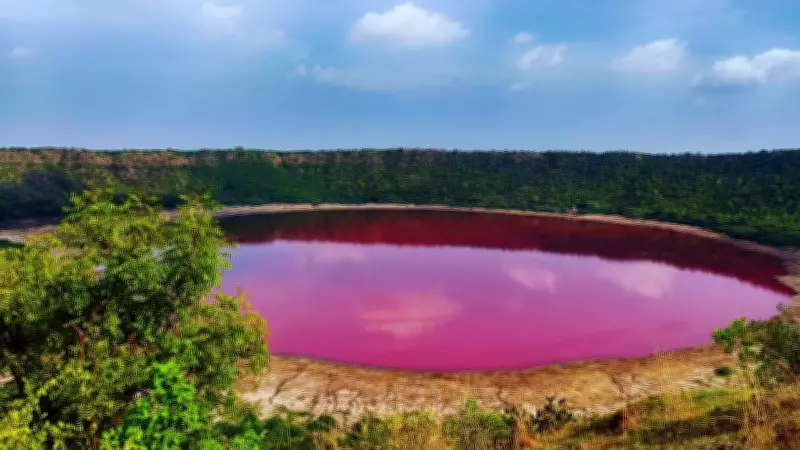
The meteorite impact created a remarkably circular depression measuring about 1.8 kilometers in diameter with depths reaching approximately 150 meters. Over millennia, rainwater gradually accumulated within this basin, forming the distinctive lake visible today. The crater's rim remains sharply defined, rising dramatically above the surrounding plains and making its extraterrestrial origins apparent even to casual observers.
Unique Geological and Chemical Properties
Beyond being a geological curiosity, Lonar Lake functions as a vital natural laboratory. The site preserves definitive evidence of cosmic collision through features including shocked minerals, impact glass formations, and breccia—rocks fused together by immense heat and pressure.
The lake's water chemistry presents particularly fascinating characteristics. Its simultaneous salinity and alkalinity create a rare combination found in only a handful of inland water bodies worldwide. This unusual chemistry results from limited freshwater inflow, high evaporation rates, and complex chemical interactions with the basaltic crater walls.
Extreme Ecosystem and Microbial Life
This chemically extreme environment supports a specialized ecosystem dominated by microorganisms adapted to high salinity and elevated pH conditions. Among these life forms are extremophiles—organisms thriving in environments once considered inhospitable to life.
Seasonal variations frequently transform the lake's appearance, with water colors shifting between green and reddish hues depending on microbial activity and mineral concentrations—a phenomenon that consistently surprises first-time visitors.
Cultural and Spiritual Significance
The crater's rim hosts several culturally significant temples that have attracted pilgrims for centuries:
- Gomukh Temple: Located near the crater rim, this serene spiritual site features a natural spring flowing through a rock formation resembling a cow's mouth. The perennial water source is considered sacred, drawing devotees for rituals and ceremonial ablutions.
- Motha Maruti Temple: Also known as the "Grand Hanuman Temple," this prominent shrine houses a large idol of Lord Hanuman believed by devotees to have emerged naturally.
- Kamalja Devi Temple: Positioned on the crater's edge, this temple dedicated to Goddess Kamalja—a local manifestation of Goddess Lakshmi—offers spectacular panoramic views of Lonar Lake and the crater basin, particularly breathtaking during sunrise and sunset.
Conservation Status and Ongoing Challenges
In recognition of its exceptional ecological and geological value, Lonar Lake received designation as a Ramsar Wetland of International Importance in 2020. This prestigious status places it among a select group of globally significant wetlands and has increased attention toward improved management practices, though effective conservation remains an ongoing challenge.

For visitors, Lonar offers a truly unique experience: walking along a meteorite-created crater rim, observing an otherworldly water body, and exploring ancient temples with timeless narratives. Researchers continue to make new discoveries at this living laboratory, while conservationists emphasize the fragility of this irreplaceable natural heritage.