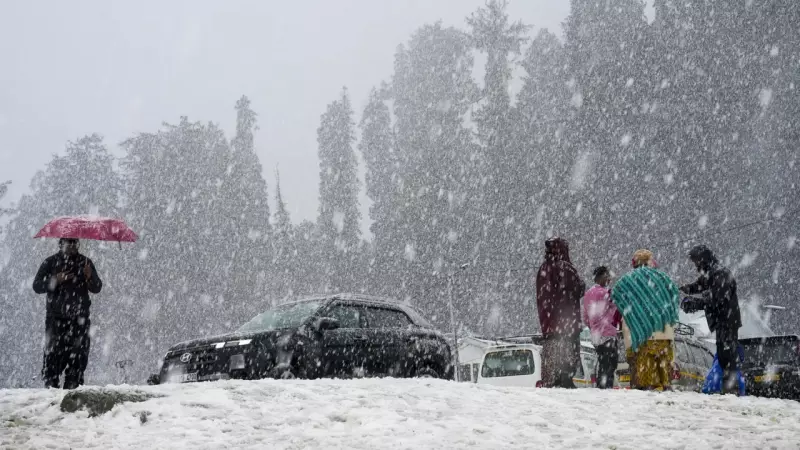
As the timeless Persian verse, often attributed to Amir Khusrau and beloved by Mughal Emperor Jahangir, echoes through the frosty air, Kashmir surrenders to the majestic yet formidable embrace of Chillai Kalan. This 40-day period, marking the harshest stretch of winter from December 21 to January 31, paints the Valley in breathtaking shades of white while testing the resilience of its people and landscape.
A Winter Wonderland and Tourism Resurgence
The Valley undergoes a dramatic metamorphosis during Chillai Kalan. Rooftops sag under the weight of snow, ancient chinar and deodar trees stand frost-crusted, and locals bundle up in traditional pherans, clutching the warmth of kangris. Iconic water bodies like Srinagar's Dal Lake develop thin sheets of ice along their edges, with shikaras navigating carefully, while the vast Wular Lake in Bandipora shows significant cracks.
This pristine beauty has triggered an unprecedented tourist boom this winter. Gulmarg is reporting nearly 100% hotel occupancy, a trend mirrored in Srinagar, Pahalgam, and other scenic spots. The Tourism Department has organized a series of events across these destinations to cater to the surge.

"We are completely sold out this time," confirmed Altaf Ahmad, a hotel general manager in Gulmarg, to IANS. In Pahalgam, resort owner Taufique Butt echoed the sentiment, stating all accommodations are fully booked. He described the season in Kashmiri, "Chillai Kalan gov panun hukmbar," meaning Chillai Kalan rules like a king.
Ujjwal Kant, a visitor from Bihar's Sonepur, shared his experience: "I actually came hoping to experience Chillai Kalan, and it's been unforgettable… frozen streams, quiet valleys, and almost postcard-like mornings."
Survival, Culture, and Ecological Significance
For Kashmiris, Chillai Kalan is a dual narrative of celebration and survival. The season's heavy snowfall is crucial, as it replenishes the high-altitude glaciers and reservoirs that feed the Jhelum, Indus, and Chenab rivers, ensuring water security through the summer. Snowfall after January 30 often melts too quickly to be effective, making the first snow of Chillai Kalan a celebrated event.
Daily life adapts to the deep freeze. "Daily routines slow down because mornings are painfully cold and water lines freeze often," explained Shafique Chaudhary, a Srinagar resident and shawl seller. "But people here are used to adjusting — we layer up, start work later, and rely more on kangris." The season deepens cultural rituals, with streets filled with people in pherans, sustained by endless cups of kahwa and noon chai.
The cold also brings ecological benefits. The snowfall provides essential "chilling hours" vital for the health of Kashmir's apple orchards. Furthermore, the Valley's wetlands have witnessed a huge influx of migratory birds from Siberia, China, and Central Asia, escaping even harsher climates.
Security Operations in the Snowbound Terrain
As Chillai Kalan grips the region, security forces have adopted a proactive winter posture. According to ANI sources in the defence establishment, the Indian Army has intensified counterterror operations in the higher, snowbound areas of Kishtwar and Doda districts, south of the Kashmir Valley.
Undeterred by freezing temperatures and heavy snowfall, the strategy involves establishing temporary bases and surveillance posts in snow-covered regions to maintain pressure on terrorist hideouts. About 30 to 35 Pakistani terrorists are estimated to be in the Jammu region, with intelligence suggesting they have moved to higher, uninhabited areas to seek winter shelter.
The Army is leading a synchronized effort with the Jammu and Kashmir Police, CRPF, SOG, and Village Defence Guards. "This inter-agency cooperation ensures seamless intelligence sharing, resource optimisation, and sharper operational execution," a source stated. The forces aim to eliminate terrorist pockets and confine them to inhospitable high-altitude areas, employing a rigorous "surveillance-sweep-surveillance" cycle. Specially trained winter warfare units adept in snow combat and avalanche response have been deployed for these challenging operations.

Thus, as Chillai Kalan weaves its spell of stark beauty and biting cold over Kashmir, the Valley thrives in a complex harmony—hosting record numbers of enchanted tourists, sustaining its people and ecology, and witnessing a vigilant security apparatus working silently in the snowy frontiers.