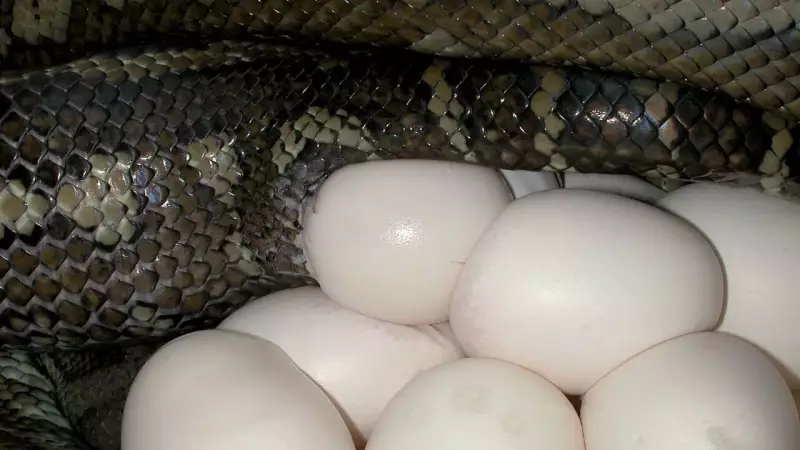
Discovering a clutch of eggs in your garden or while out on a nature trail can be a moment of quiet mystery. Our first instinct is often to assume they belong to a bird. However, the natural world holds many surprises, and not every egg you find under a log or half-buried in leaf litter is avian. The world of snakes adds a fascinating layer of complexity, as their reproductive methods vary widely. Understanding the key characteristics of snake eggs can turn uncertainty into knowledge and help you coexist safely with local wildlife.
Key Physical Characteristics of Snake Eggs
Unlike the hard, brittle shells of bird eggs, snake eggs have a softer, leathery, and slightly rubbery texture. If you gently press one, it will give a little before springing back. This flexibility is a crucial adaptation, preventing the eggs from cracking when they are laid close together or pressed against soil and debris. The surface typically appears matte rather than glossy and may feel damp in humid environments.
In terms of colour, most snake eggs are pale white, off-white, or light beige. Fresh eggs can sometimes look slightly translucent. It's important to note that dirt and moisture can stain them over time, making older eggs appear darker or blotchy. A key differentiator from many bird eggs is that snake eggs rarely have spots, speckles, or other markings.

Shape, Size, and Typical Nesting Sites
When examining shape, look for an oblong or elongated form rather than a perfect oval. They often look stretched or uneven. Size varies dramatically with species, ranging from as small as a grain of rice to several inches long, with a common range between one and five inches. Eggs within the same clutch may not be uniform; some can appear larger or more compressed than others.
Snakes do not build intricate nests. Instead, they seek out hidden, stable, and undisturbed locations that offer protection from predators and the elements. Common sites include under rocks, beneath thick layers of leaf litter, inside abandoned rodent burrows, or simply tucked into loose soil. Finding a group of eggs in such a quiet, dark spot is often a strong indicator of their reptilian origin.
What To Do (And Not Do) If You Find Them
The most important rule is to leave the eggs exactly where you found them. Avoid handling, relocating, or rotating them, as even brief contact can cause damage or lead the female to abandon the clutch. While a method called "candling"—holding an egg up to a light to see the embryo—can confirm it's a snake egg, this should only be attempted by experts.
If you are concerned or need confirmation, the safest course is to contact local wildlife authorities or a herpetologist. Take note of the surroundings; look for shed snake skins or tracks nearby for additional clues. Remember, not every natural discovery requires human intervention. Often, wildlife just needs space to thrive. By learning to identify these signs, you contribute to both your safety and the conservation of these important reptiles in the Indian ecosystem.