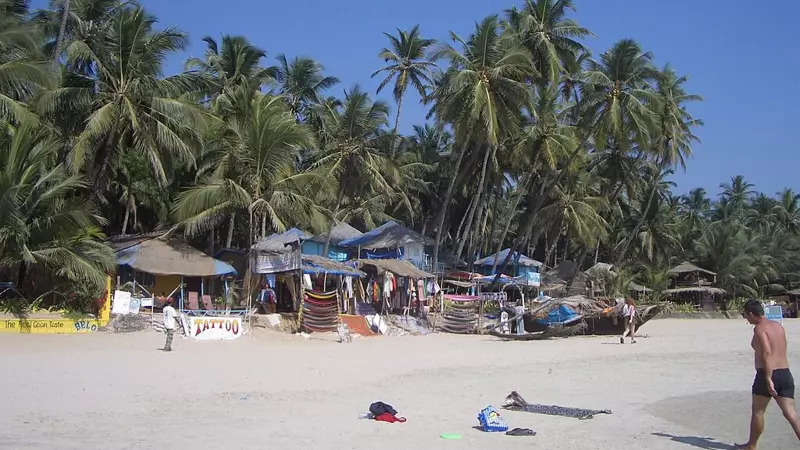
The onset of the tourist season in Goa has been marred by alarming incidents of harassment against women on its famous beaches, putting the coastal state's safety measures under intense scrutiny. Police and tourism authorities have taken cognizance of multiple complaints, particularly from solo female travelers, prompting a drive against touts and illegal agents.
Tourists Share Harrowing Ordeals
Polina Gerchikova (39), a Russian national who has been traveling solo to Goa for three years, described a recurring pattern of intrusive behavior. "Men just come up to me and request a photo or a selfie…as if I am a prop," she revealed. In one frightening instance, a man accosted her on an empty beach and began stalking her. "I told him to go away, but he kept stalking me. When I started recording a video on my phone and pretended to call someone, he covered his face and ran away," Gerchikova recounted.
The situation appears widespread. A 19-year-old journalism student from Mumbai shared her traumatic experience at Baga beach, where she was visiting to learn about DJ culture. "As I was walking in the lane leading to the beach, the waiters at the restaurant accosted me, offering free drinks or food. I ignored them," she said. The harassment escalated quickly: "At the entry gate of the beach, a middle-aged man approached and said, 'I will pay whatever you want.' He then asked me if I was Indian or a foreigner. At the beach, some young men asked how much I would charge for the night."

The teenager, fearing for her safety, started recording video and called her cab driver. "Every step I took, someone was either asking for my 'rate', or trying to initiate a conversation or offering me free drinks and food or stalking me. I felt unsafe and anxious and wanted to hit those men," she expressed, adding that the cab driver ultimately rescued her from the situation.
Viral Incidents Prompt Police Action
The concerns about women's safety gained momentum after two viral videos emerged recently. One video, which circulated on social media last week, purportedly showed a group of men harassing and groping two foreign women while taking photographs with them at Arambol beach.
Police have registered an FIR against unidentified accused persons in the Arambol incident under section 74 (assault or criminal force to woman with intent to outrage her modesty) and 126 (2) (wrongful restraint) of BNS. According to the FIR, the incident occurred on November 3, when the accused wrongfully restrained and harassed two foreign nationals walking on the beach.
Regarding the Baga beach incident, police confirmed that their social media monitoring cell has contacted the woman to gather specific details, and further investigation is ongoing.
Authorities Respond to Safety Crisis
In response to these incidents, authorities have initiated measures to address the safety concerns. The Calangute police station has launched a drive against touts and illegal agents. On Sunday, two accused were booked and 13 touts and illegal agents were apprehended.
"Our goal is to ensure every tourist leaves Calangute with fond memories, free from the nuisance of illegal activities," police stated in an official statement.
The Tourism Department has also taken note of the situation. Kedar Naik, Goa government's Director of Tourism, emphasized that "The safety and security of tourists is of prime importance to us. We will ensure that proper action is taken. We will ensure that tourist police patrolling is ramped up on the beaches, especially during the season from November to March."
However, a government official, speaking anonymously, suggested that a negative perception was being created on social media about the coastal state's image due to isolated incidents. "This does not reflect the reality of the state," the official claimed, even as multiple women came forward with similar harassment experiences.
The recurring nature of these incidents, particularly as the tourist season begins from November to March, raises serious questions about the effectiveness of existing safety measures and the need for more robust protection for women tourists in Goa's popular coastal areas.