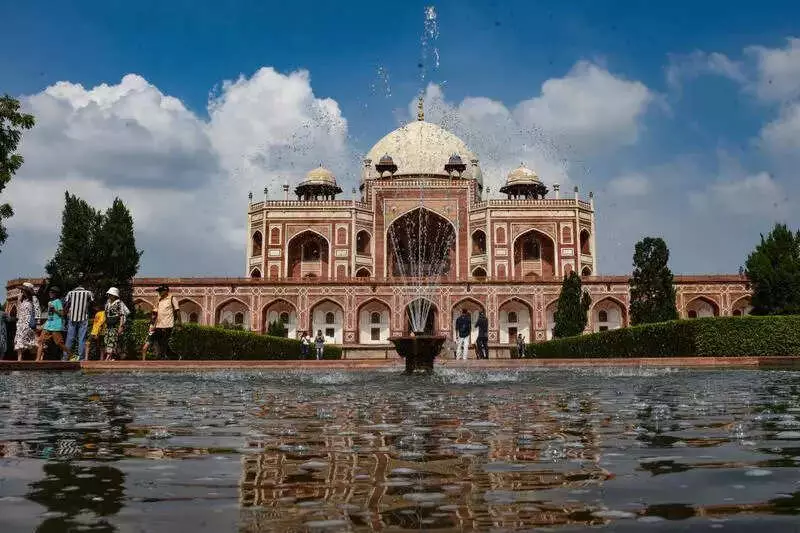
The Delhi government has unveiled an ambitious, multi-faceted strategy aimed at fundamentally transforming the national capital's tourism landscape. The core objective is to attract more tourists, particularly high-spending visitors, by repositioning Delhi from a mere transit point to a premier, experience-driven destination for leisure, business, culture, and medical travel.
Blueprint for a Tourism Transformation
This comprehensive push involves a series of coordinated initiatives. Authorities will conduct a city-wide infrastructure gap analysis to identify shortcomings in areas like tourist facilitation centres, signage, public amenities, and heritage interpretation facilities. Based on the findings, new tourism infrastructure projects will be prioritized.
The plan also includes developing new tourism circuits, curating specialized city tours, and strengthening Delhi's overall tourism branding. A significant focus will be on rolling out dedicated festival programming, promoting the concert economy, and giving a major boost to medical tourism. To encourage private investment, the government will actively reach out to investors and hospitality groups for projects related to hotels, convention centres, experience zones, and food and retail hubs.

Institutional Framework and Learning from Best Practices
To ensure effective execution, the government is establishing a dedicated Project Management Unit (PMU) within the Delhi Tourism and Transportation Development Corporation (DTTDC). This unit will be responsible for studying and detailing the key activities, policies, and plans. It will also assist in drafting and refining policies to ensure faster and more uniform implementation across various departments.
A critical function of the PMU will be to benchmark Delhi's tourism policies against successful models from other Indian states and global cities. Officials cited specific examples: Rajasthan's heritage-led model, Maharashtra's (particularly Mumbai's) expertise in boosting tourism through large-scale events and MICE (Meetings, Incentives, Conferences, and Exhibitions) infrastructure, and Gujarat's riverfront development and branding initiatives. The PMU will study these and other models before finalizing which best practices to adapt for Delhi.
Overcoming Challenges and Future Vision
Recognizing the coordination challenges posed by multiple agencies, the PMU will also help DTTDC liaise with bodies like the Municipal Corporation of Delhi (MCD), the Delhi Development Authority (DDA), and the Archaeological Survey of India (ASI) to streamline approvals. The government plans to identify both fiscal and non-fiscal measures that have worked elsewhere, such as public space activation models and tourist service standards, for implementation in Delhi.
An official emphasized the broader vision, stating that Delhi, as a global heritage destination and key gateway to India, should be an unmissable stop for every foreign tourist visiting the country. The multi-pronged strategy represents a concerted effort to not only increase tourist footfall but significantly enhance the quality and economic value of the tourism experience in the capital.