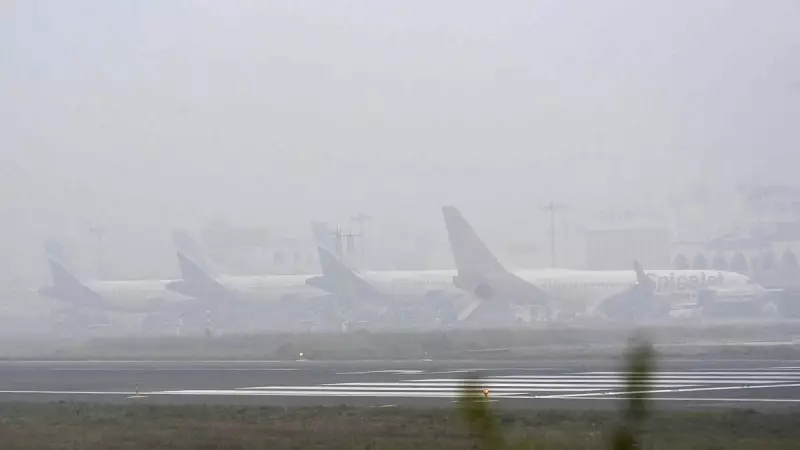
Heavy fog blanketed the national capital on Sunday, severely disrupting air travel and causing significant inconvenience to thousands of passengers. Delhi's Indira Gandhi International (IGI) Airport witnessed a major operational crisis as 128 flights were cancelled and eight others had to be diverted to alternative airports due to the persistently low visibility.
Flight Operations Grind to a Halt
The disruption began in the early hours of Sunday, January 14, 2024, as a thick layer of dense fog descended over Delhi and the surrounding National Capital Region (NCR). The sudden and severe drop in visibility forced airport authorities to implement strict low-visibility protocols. According to data from the airport, the cancellations and diversions were a direct consequence of the adverse weather conditions, which made it unsafe for aircraft to take off or land for extended periods.
Passengers arriving at the airport found themselves stranded, with long queues forming at airline help desks as they scrambled for information on rescheduled flights or alternative travel arrangements. The scene inside the terminals was one of confusion and frustration, with many travellers spending hours waiting for updates.

Passenger Woes and Airport Response
The cascading effect of the initial cancellations and delays led to a day-long logjam. Flights scheduled for later in the day were also impacted as aircraft and crew were out of position. Airlines issued advisories urging passengers to check their flight status before heading to the airport. While airport staff worked to manage the crowds and provide assistance, the sheer scale of the disruption overwhelmed normal procedures.
The eight flights that were diverted were sent to nearby airports like Jaipur, Lucknow, and Amritsar, where weather conditions were clearer. This, however, added to the travel ordeal for those passengers, who then had to arrange further travel back to Delhi or to their final destinations.
A Recurring Winter Challenge
This incident highlights the recurring vulnerability of northern India's aviation and transport infrastructure to fog during the winter months. While Delhi airport is equipped with advanced CAT III-B Instrument Landing Systems (ILS) that allow some aircraft to land in very low visibility, not all airlines have pilots certified to use this technology, and operations still slow to a crawl.
The disruption at IGI Airport serves as a stark reminder of nature's impact on modern travel networks. It underscores the need for passengers to be prepared for such eventualities during the winter season, by considering travel insurance, allowing for extra buffer time, and staying in constant touch with their airlines for real-time updates. As the fog is expected to linger, authorities have advised travellers to remain vigilant for the next few days.