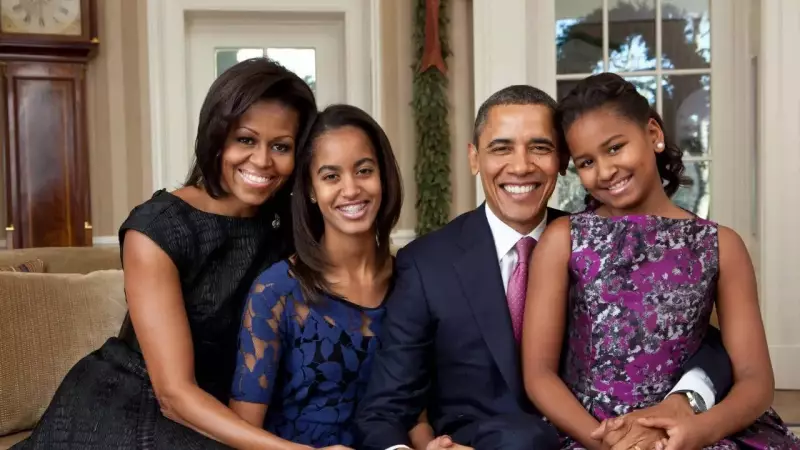
Parenting under public scrutiny presents immense challenges, but navigating this journey within the iconic walls of the White House is an entirely different experience. Former First Lady Michelle Obama and former President Barack Obama, however, crafted a remarkable path in raising their daughters, Malia and Sasha. Their philosophy moved away from the pursuit of perfection, focusing instead on core values like intention, reverence, and real-life lessons.
Creating Normalcy in an Extraordinary World
From the very beginning, the Obamas were determined to shield their children from the overwhelming glare of their unique circumstances. Despite living in the most famous residence in America, they committed to providing Malia and Sasha with a childhood that felt as ordinary as possible. Michelle Obama was instrumental in enforcing routines like daily bed-making and seeking summer job equivalents for the girls. She ensured they engaged in typical teenage activities, consciously avoiding coddling them and instead instilling a sense of personal responsibility.
The family faced unprecedented public and media pressure, but Barack and Michelle erected strong boundaries to protect their daughters' privacy. Michelle Obama has been vocal about her resolve to never subject her children to the intense scrutiny she herself endured, allowing them the space to develop their own identities away from the cameras.

Core Philosophies: Walking Your Own Path
One of the most powerful messages Michelle imparted to Malia and Sasha was to "walk your own walk." This advice encouraged the girls not to let external opinions—whether from their parents or the global audience—define them. Instead, they were urged to take the time for self-discovery and forge their own identities. This foundational principle fostered independent thinking and confidence, proving more effective than a rigid set of imposed rules.
Adaptive Discipline and Fostering Independence
Michelle Obama has openly shared her evolution as a parent, including her early use of the Ferber sleep training method and her subsequent change of heart. This honesty highlights that even the most assured parents reassess their methods. The Obamas' approach to discipline leaned towards allowing natural consequences to teach lessons, rather than relying on strict punishments. Michelle advocated for a form of tough love, believing that shielding children from all discomfort does them a disservice in the long run.
Conflict resolution was another area where the Obamas promoted independence. When their daughters argued, Michelle often resisted immediate intervention. By allowing Malia and Sasha to resolve disputes themselves, they learned critical thinking, emotional management, and perspective-taking. Michelle also emphasized the importance of active listening and valuing her daughters' questions, creating an environment where they felt heard and respected, which built immense trust and self-assurance.
Recognizing their daughters' distinct personalities was key. Malia and Sasha, though twins, exhibited different temperaments—one more eager to please, the other more reserved. The Obamas adapted their parenting styles accordingly, demonstrating that empathy, flexibility, and creativity are essential to nurturing children as unique individuals, not just as part of a family unit.
The story of the Obama family's parenting journey offers a powerful blueprint. It shows that even amidst extraordinary pressure and global attention, grounding children in normalcy, encouraging independent thought, and adapting to their individual needs can raise confident, well-adjusted, and resilient young adults.