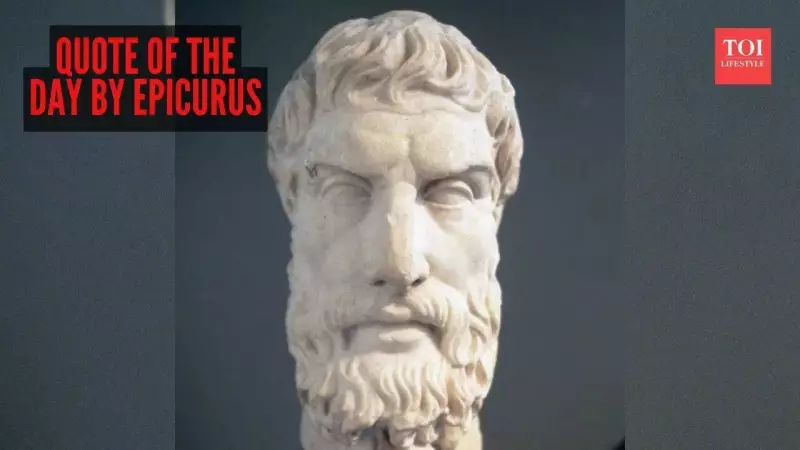
In an age of constant striving and comparison, the teachings of an ancient thinker offer a surprisingly modern path to peace. The Greek philosopher Epicurus, born on the island of Samos in 341 BCE, founded a school in Athens known as "The Garden." Contrary to popular misconception, he was not a proponent of hedonistic indulgence but a preacher of moderation and mental clarity. His core idea was simple yet profound: the highest pleasure is found in the absence of pain and mental disturbance.
The Misunderstood Message of Epicurus
While many of his contemporaries engaged in abstract theorising, Epicurus was deeply practical. He focused on a single, universal question: how can an individual achieve a tranquil and contented life? He argued that happiness springs from appreciating life's simpler pleasures and curbing unnecessary desires. This philosophy was often misrepresented, casting Epicurus as an advocate for luxury, when in reality, his goal was to liberate people from anxiety and want.
Decoding Today's Powerful Quote
The quote, "Do not spoil what you have by desiring what you have not; remember that what you now have was once among the things you only hoped for," is widely attributed to Epicurus and echoes his teachings in collections like the Vatican Sayings. Its first part is a stark warning against the corrosive power of comparison. When we constantly covet what is absent, we erode our gratitude for the blessings already present, trading contentment for perpetual restlessness.

The second half of the quote delivers its transformative power. Epicurus prompts us to reflect on our own journey. The very things we take for granted today—a job, a home, a relationship—were likely once fervent hopes and dreams. This shift in perspective turns ordinary life into a testament of achievement and growth.
Why Epicurus Matters in Modern India
In today's world of social media pressure and consumerist culture, Epicurus' wisdom is strikingly relevant. The relentless chase for more—more possessions, more status, more experiences—often leads to dissatisfaction. His philosophy presents a radical counter-narrative: peace comes from desiring less, not acquiring more. This isn't a call to abandon ambition, but a strategy to safeguard inner well-being by anchoring oneself in present-moment gratitude.
By remembering that our current reality is a past dream fulfilled, we can cultivate a mindset of thankfulness instead of anxiety. This timeless insight continues to resonate because it addresses a fundamental human flaw: overlooking our fulfillment in the endless pursuit of elusive ideals. The teachings of Epicurus, who lived until 270 BCE, thus remain a vital guide for anyone seeking genuine and lasting happiness.