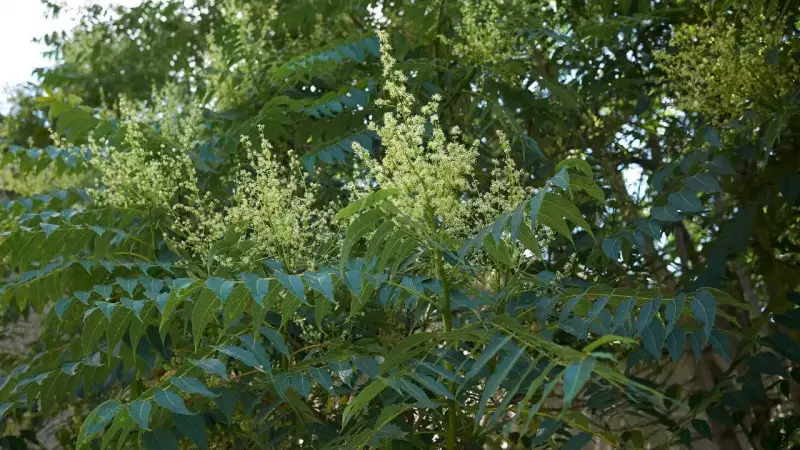
Often mistaken for a hardy garden volunteer, the Tree of Heaven (Ailanthus altissima) is an invasive species quietly establishing itself in urban India, only revealing its destructive potential once it's too late. This fast-growing tree, frequently sprouting near walls, sheds, or compost areas, is increasingly common in redeveloped zones and near new infrastructure. Scientific research now confirms its link to persistent ecological damage and structural problems for homes, making it a significant concern for Indian homeowners.
Identifying the Tree of Heaven: Key Features for Indian Gardeners
Ailanthus altissima is a deciduous tree known for its rapid growth. It typically features a straight trunk and an open, broad crown. Mature specimens can easily surpass 20 metres in height under good conditions. Its most recognizable trait is its large, pinnate leaves, which can extend over half a metre in length and consist of numerous oval leaflets.
A telltale sign is the strong, unpleasant odour released when its leaves or stems are crushed, caused by glandular lobes at the base of each leaflet. The bark of young trees is smooth and pale grey with vertical lines, darkening and cracking with age. In early summer, it flowers, with female trees producing dense clusters of papery, winged seeds that disperse widely by wind and often cling to branches through winter.

In India, this tree is predominantly an urban dweller. It thrives on disturbed land, colonising areas like railway embankments, roadsides, canal banks, and housing developments. Its remarkable tolerance for air pollution, drought, heat, and poor soil allows it to outcompete native species in challenging city environments.
The Hidden Risks: Biological Traits That Cause Long-Term Damage
Peer-reviewed research, including studies published in the journal Plants, highlights specific biological traits that make the Tree of Heaven a high-risk planting near buildings. These are not assumptions but findings from field measurements and long-term monitoring.
The tree poses a multi-faceted threat:
- It develops an extensive, aggressive root system that spreads far beyond the tree's canopy and invades cracks in foundations, plumbing, and pavements.
- It reproduces vigorously through roots, sending up new suckers whenever the plant is cut or the soil disturbed.
- It releases allelopathic chemicals (quassinoids) from its tissues, which inhibit the germination and growth of other plants nearby.
- Mature female trees produce vast quantities of wind-borne seeds, facilitating spread to neighbouring properties.
- It exhibits a strong regenerative response; mechanical damage like cutting often triggers more aggressive suckering instead of killing the tree.
Impact on Indian Homes and Gardens: A Lasting Menace
The consequences of planting this tree in a domestic setting are severe and often delayed, becoming apparent as the tree matures. The problems can persist for years even after the visible tree is removed, due to the surviving root network.
Homeowners may face the following issues:

- Structural Damage: Roots can lift and crack patios, driveways, boundary walls, and drainage systems, leading to costly repairs.
- Persistent Regrowth: Dense clusters of suckers invade lawns, flower beds, and fence lines, creating an ongoing maintenance nightmare.
- Soil Degradation: The soil chemistry is altered, making it difficult to grow other plants due to residual allelopathic compounds.
- Unchecked Spread: The tree easily spreads to adjacent plots and public land via seeds and root runners, causing disputes with neighbours.
- Health Concerns: During flowering, the tree emits pollen and volatile compounds. Some individuals report headaches, nausea, dermatitis, and respiratory irritation upon exposure.
These effects are particularly intensified in India's densely packed urban neighbourhoods and small garden plots, where the tree's expansive growth pattern clashes directly with limited space. The result is a legacy of physical damage and altered ecosystems that can haunt a residential area long after the initial tree is gone.