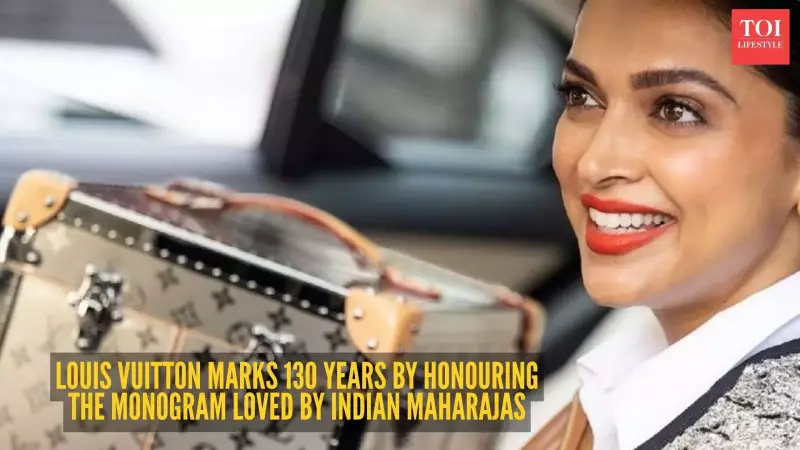
The world of haute luxury is taking a grand, nostalgic turn. As French fashion house Louis Vuitton marks a monumental 130th anniversary in 2026, it is set to reintroduce a piece of its storied past: a historic monogram that was once the exclusive preference of India's opulent royalty. This move is not just a celebration of the brand's legacy but a direct nod to its deep-rooted connection with the Indian subcontinent's erstwhile princely states.
The Royal Patrons: India's Maharajas and Their LV Obsession
The bond between Louis Vuitton and India's aristocracy is legendary. Among its most illustrious clients was Maharaja Jagatjit Singh, the last ruling monarch of Kapurthala. Renowned for his Francophile tastes and extravagant lifestyle, he was seldom seen without his custom Louis Vuitton trunks. Historical accounts suggest his collection was staggering, comprising around 60 bespoke LV trunks. These were not mere luggage; they were mobile wardrobes and treasure chests, meticulously designed to transport everything from ceremonial regalia to his most personal belongings.
He was, however, in esteemed company. Sayajirao Gaekwad III of Baroda emerged as perhaps Louis Vuitton's most devoted client during the 1920s. His commissions were marvels of craftsmanship and personalisation. One notable order was a Torino suitcase fitted with vermeil and ivory toiletry accessories. His fastidious nature extended to his beverage preferences, leading him to commission a special shoe trunk that ingeniously included a dedicated case solely for his tea—a non-negotiable element of his travels.

From Polo Fields to Palaces: The Northern Connection
The allure of Louis Vuitton's impeccable trunks also captivated the royals of the north. The Maharajas of Jammu and Kashmir had been on the brand's client ledger since 1919. Maharaja Hari Singh, who ascended the throne in 1925, was an avid polo enthusiast. His passion for the sport was supported by custom LV trunks that were engineering feats in themselves. These trunks featured designated compartments to securely hold his polo mallets, blending supreme practicality with the unmistakable delight of luxury. This attention to detail for a specific sport underscored the brand's commitment to catering to the unique lifestyles of its elite clientele.
The Monogram's Journey: From Gothic Revival to Modern Comeback
The monogram being revived has its own intriguing tale. As counterfeit products flooded the market in the 1990s, Georges Vuitton introduced a new monogram on a fresh canvas to honour his father's legacy and combat imitations. This design was rich with symbolism, drawing inspiration from Gothic and architectural motifs like rosettes, quatrefoils, and trefoils. The iconic interlocking LV initials were surrounded by floral medallions, and its authenticity was fiercely protected by official documents that restricted its embossing to specific colours and materials.
Now, 130 years after the brand's founding, Louis Vuitton is circling back to this iconic chapter. The anniversary celebration involves revisiting this historic monogram and reinterpreting it with a contemporary and fresh perspective. This revival is more than a fashion statement; it is a historical reclamation, reconnecting the brand with an era when its trunks were integral to the grand tours and majestic lives of India's most powerful figures.
The story of Louis Vuitton and the Indian maharajas is a testament to timeless luxury and personalised craftsmanship. As the brand unveils this piece of its heritage, it doesn't just launch a product—it resurrects a narrative of royal patronage, cross-continental allure, and an unwavering pursuit of excellence that defined an era.