For over a decade, Varun Jashnani was on a unique quest. His mission was to find a person about whom he knew only a name: 'N Bhowmick', engraved on the caseback of a pre-1930s Favre Leuba Sea-Chief watch. This timepiece, once owned by the mysterious 'N', journeyed through the vintage watch market's backchannels from Thrissur to a small shop in Mumbai's Byculla. There, a 24-year-old Jashnani, younger than the watch itself, bought it, sparking a 13-year search that mirrors the deep personal connections driving India's burgeoning vintage watch community.
The Allure of Mechanical History
A vintage watch, typically defined as being at least 25 years old, is a vessel of multiple narratives. It holds stories of its origin, its accidents, its brand's legacy, the craft behind its mechanics, its servicing journey, and finally, how it found a home on a wrist. An increasing number of Indian enthusiasts are gathering around these fading luminous dials, eager to listen to and tell these tales.
Jashnani, now Vice-President at Lighthouse Luxury, is one such avid listener, drawn to mechanical movements that spring to life with a wind. His fascination began in 2011 with a first-generation HMT Kohinoor spotted in his watch-repair uncle's Byculla display case. "It stood out from the quartz watches in the market. Here was a watch you could engage with. And it only cost Rs 2,000," he recalls. That hook led to research and collection; today, 105 of his 110-piece collection are vintage.

Jude de Souza, founder of The Revolver Club (TRC), which expanded into watches three years ago, sees these pieces as conversation starters. "In a world where people spend hideous amounts on blah watches, these stand out. They speak to a time when companies were allowed to take risks, and individuality was valued over scale," he says, referencing the pre-quartz era.
Market Evolution: From Niche to Mainstream
The Quartz Crisis of the late 80s, triggered after Seiko launched the first quartz wristwatch in 1969, was a pivotal moment. It forced nearly 1,000 Swiss watchmakers out of business, making surviving mechanical pieces rarer and more coveted. Today's enthusiasts actively scour the market for these models, often undertaking costly restorations.
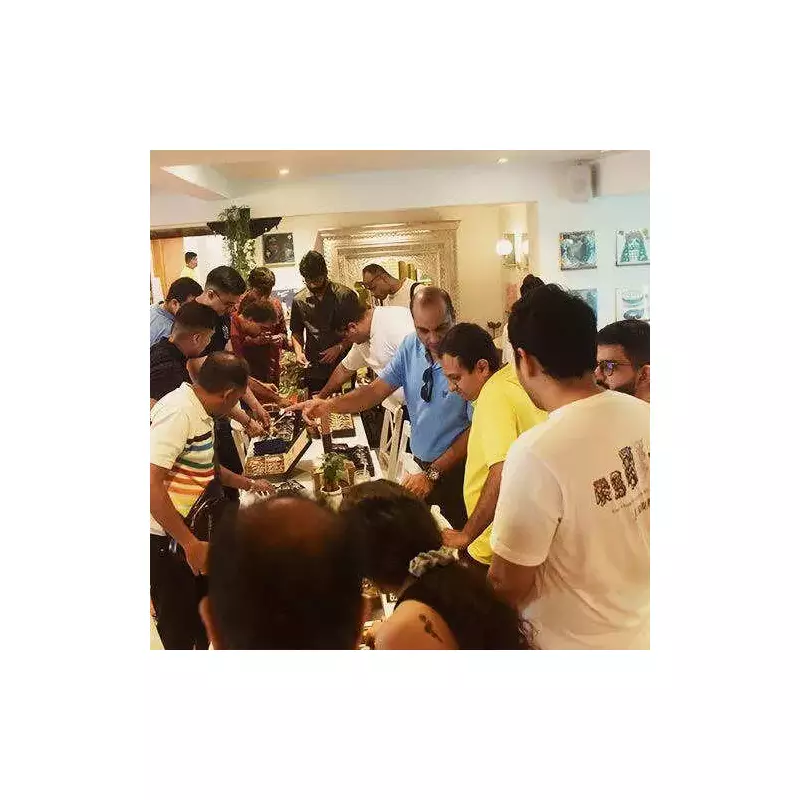
As interest surges, supply channels are widening. TRC started sourcing from customers and trusted dealers, but now sellers from across India contribute to a catalogue featuring the familiar (HMT, Citizen), the foreign (USSR-era Raketa), and the premium (Omega, Rolex). To build an ecosystem, they host watch meets for trading, talking, and browsing collections.
"We want to de-intimidate the average young person," says de Souza. "You don't need to buy an Omega or a Rolex to be a watch guy." Buyers are split: those under 25 spending under Rs 10,000, and those over 35 investing Rs 1–2 lakh or more, with men outnumbering women 4 to 1.
Punit Mehta, Chapter Lead at RedBar India—a community that grew from 7 members during COVID to over 500—notes that vintage watches often serve as entry points to luxury. "You can buy a nice vintage Omega from the 70s at the price of a new Tissot," he states.
Formalising a Market: Authentication and Care
India's vintage watch interest is a recent phenomenon. Hinesh Kotecha, Director at AstaGuru Auction House, observes that what was once a niche hobby has evolved into a structured segment with higher auction participation and price benchmarks. While hard to value precisely due to private sales, the market has grown steadily over the past decade, fueled by disposable incomes, social media, and a desire for individuality.
With formalisation comes the need for authentication. Both buyers and sellers increasingly rely on service centres for verification and repair. De Souza points out a common issue: "Many vintage watches are what collectors call 'Franken' or 'Bombay watches'—not entirely authentic, with repainted dials or cannibalised parts."

Skilled technicians at centres like My Watch Merchant (MWM) in Goregaon and Pogu Watch Service in Parel, which grew from neighbourhood shops to multi-storey labs, address these challenges. Paresh Parihar, Director at MWM, admits finding original parts is toughest; they often fabricate unavailable components. They also offer customisation, like changing straps to alter a watch's character.
A key piece of advice from experts runs counter to Indian instincts: wear your vintage watch, don't stash it away. "The more often you wear them, the longer they'll last," advises Parihar. Chandraprakash Pogu adds that preserving the watch's patina, its signs of a life lived, is often better than over-polishing it to look new.
For collector William Charles, the journey was personal. After accidentally breaking his father's cherished 1950s Breitling AVI 765 chronograph as a child, he rediscovered it 35 years later. After spending Rs 88,000 on repairs, he chose not to sell. "I can't bring myself to wear it outside," he admits, but he wears it at home occasionally, knowing it must be used to be maintained—a sentiment at the heart of this passionate community.
Look out for upcoming events:
- India Watch Weekend 2026: January 17–18, Four Seasons Hotel.
- The Revolver Club Community Meet: January 17, 12 pm onwards, Mahim.
- AstaGuru's 'Legacy Jewellery, Silver & Timepieces' auction: January 15–16 online.