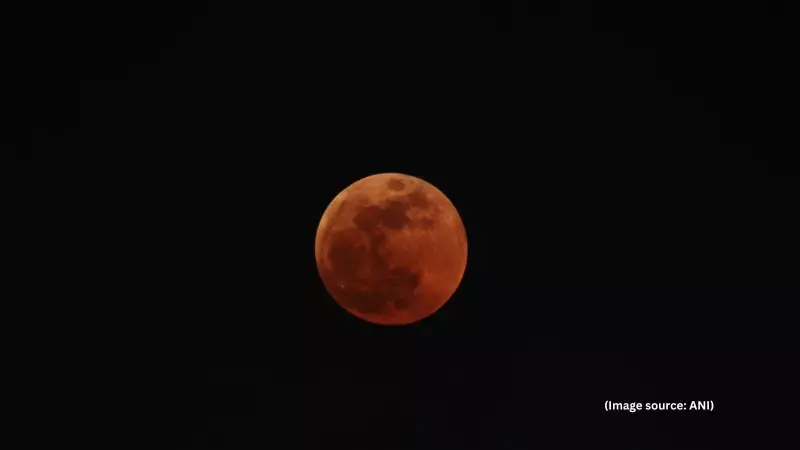
The first supermoon of the new year, popularly known as the Wolf Moon, put on a spectacular show for sky enthusiasts across India on Saturday, January 3, 2026. The celestial event was particularly striking in eastern cities like Bhubaneswar in Odisha and Guwahati in Assam, where the moonlit night sky offered a breathtaking view.
What Made the Wolf Moon a Supermoon?
A supermoon occurs when a full moon coincides with the moon's closest orbital point to Earth, known as perigee. According to National Geographic, this alignment causes the lunar disc to appear significantly larger and brighter than usual. During this specific event, the moon was approximately 362,641 kilometers from Earth at its nearest approach.
This proximity resulted in a visual treat: the Wolf Moon appeared roughly 14 percent larger and 30 percent brighter compared to the most distant full moon, or micromoon, of the year. This made it one of the most visually impressive lunar events for 2026.

Prime Viewing Time and the Orange Glow
In India, the optimal viewing window was a short period after sunset. The most breathtaking views were reported between 5:45 PM and 6:00 PM Indian Standard Time (IST). NASA noted that this was when the moon was both near its full phase and close to perigee.
As the supermoon rose near the horizon, observers were treated to a stunning warm orange-yellow tint. This coloration, as explained by NASA, happens because moonlight passes through a thicker layer of Earth's atmosphere when the moon is low. This atmospheric filter scatters blue light and allows longer red wavelengths to pass through, creating that characteristic tangerine hue.
A Global Event and the End of a Supermoon Run
The supermoon was a global phenomenon, peaking at different times around the world. It reached its zenith at 5:30 AM EST (4:00 PM IST) on January 3, according to Space.com. Other peak times included 10:03 AM GMT in London, around 7:30 PM local time in Tokyo, and approximately 9:03 PM in Sydney.
This Wolf Moon marked the conclusion of a four-month series of supermoons that began in October 2025. Skywatchers will now have to wait until the end of 2026 for the next opportunity to witness a similar celestial spectacle.
The event was widely shared on social media, with news agency ANI posting videos of the supermoon illuminating the skies over Bhubaneswar and Guwahati, allowing those who missed the live event to catch a glimpse of its beauty.