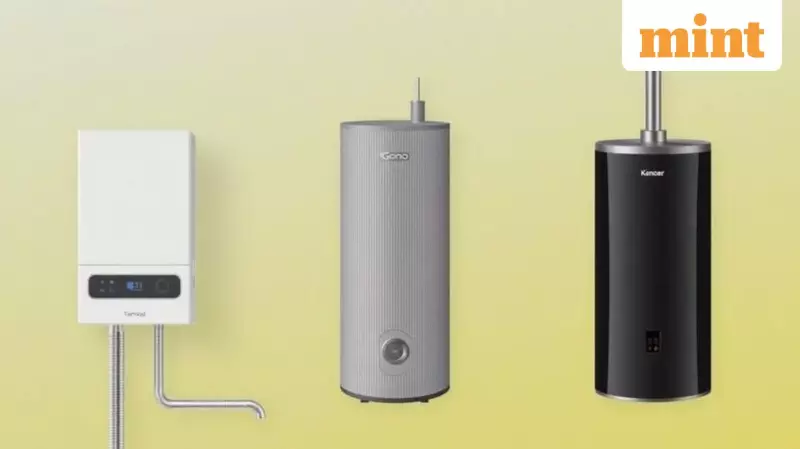
For Indian households, the debate between a tankless water heater and a traditional storage geyser is not about which technology is newer. It is a fundamental choice about matching the right system to your daily habits and home setup. This decision influences your electricity bills, the space available in your bathroom or kitchen, your maintenance schedule, and even how your family plans its day. The core difference lies in one system being ready with hot water and the other reacting to create it on demand.
Understanding the Storage Water Heater: The Reliable Workhorse
A storage water heater, commonly known as a geyser, operates on a simple principle. It heats a fixed volume of water—be it 10 litres, 15 litres, or 25 litres—and stores it in an insulated tank. The unit maintains this temperature, cycling on and off, ensuring hot water is available instantly until the tank is empty. This design offers predictability and stable water temperature, making it ideal for homes with strict morning and evening routines.
However, the system has clear limitations. The biggest drawback is its finite capacity. Once the stored hot water is used up, you must wait for the tank to refill and reheat, which can disrupt showers or chores in larger families. Energy consumption is another concern, as standby heat loss means it uses power even when not in active use. Maintenance involves dealing with sediment buildup and eventual tank corrosion, which affects efficiency and lifespan.

Popular models in the Indian market, as highlighted, include the Crompton Arno Neo 10-L 5 Star (₹5,199), the Bajaj Shield Series New Shakti 15L (₹6,699), and the AO Smith 15 Litre 5 Star geyser (₹6,999). These are often chosen for their lower upfront cost, straightforward installation, and widespread serviceability.
The Tankless Water Heater: The Efficient On-Demand Solution
In contrast, a tankless or instant water heater takes a reactive approach. It heats water directly as it flows through the unit, with no storage tank involved. When you open a hot water tap, the heating element activates immediately, providing a continuous stream of hot water. This design virtually eliminates the problem of running out of hot water and is highly energy-efficient, as it consumes electricity only when in use.
These units are compact, saving valuable space, and offer precise digital temperature control. They are excellent for homes with irregular schedules, longer usage periods, or where space is at a premium. However, the initial investment is higher. Installation may require upgrading electrical wiring or gas lines, and in areas with hard water, regular descaling is crucial for performance. An undersized unit can also struggle if multiple hot water outlets are used simultaneously.
Making the Right Choice: Lifestyle Over Technology
The final decision hinges on understanding your household's behaviour. Storage water heaters suit traditional, routine-based homes with predictable demand and budget constraints. They are a familiar, simple solution where upfront cost is a primary factor.
Tankless systems represent a long-term investment. They reward households that value energy savings, space optimisation, and adaptability. The higher initial cost is balanced by lower operating expenses and a longer lifespan. The choice is rarely straightforward and depends entirely on how your family uses hot water, the available infrastructure, and your long-term plans for the home.
Ultimately, neither technology is universally superior. A storage geyser reflects an approach of readiness, while a tankless system is all about intelligent response. Evaluating your daily patterns, space, and budget will lead you to the perfect match for your Indian home.