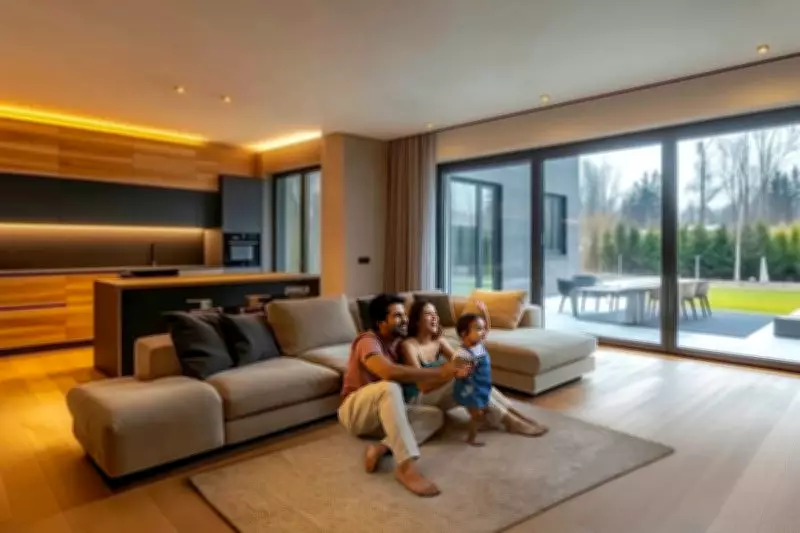
Smart Lighting in Interior Design: Crafting Visually Appealing Spaces
Great interiors fundamentally begin with exceptional lighting. Regardless of how meticulously you select furniture or colors, inadequate illumination can render a room flat and uninviting. Strategically planned lighting enhances every design element, infusing spaces with warmth and allure that captivate both residents and visitors.
Layered Lighting Basics: The Secret to Photogenic Rooms
Layered lighting stands as one of the most impactful concepts in interior design. Rather than depending on a solitary overhead fixture, it integrates multiple light sources at varied levels to achieve visual harmony and coziness. There are three primary layers to consider.
- Ambient lighting with ceiling lights supplies the overall brightness required for a room and establishes the foundational mood.
- Accent lighting, such as decorative lights for wall features, directs attention to specific zones and injects character.
- Task lighting concentrates on functional areas like reading nooks or desks without overwhelming the remainder of the space.
When these layers synergize, rooms feel balanced and vibrant. Spaces reliant on a single light source often appear dull, a pitfall to avoid for aesthetic appeal.

Ceiling Lights: Creating Bright and Balanced Foundations
Ceiling lights serve as the backbone of any lighting strategy. They determine the overall luminosity and significantly influence the initial impression upon entering a room.
Contemporary styles are engineered to excel in both form and function. Recessed ceiling lights integrate seamlessly with surfaces for a sleek, minimalist aesthetic. Pendant ceiling lights act as statement pieces above dining tables or kitchen islands. Panel ceiling lights distribute uniform brightness across expansive areas, ensuring consistent illumination.
Wall Lights: Adding Depth and Dimension
While ceiling lights manage overhead brightness, wall lights introduce depth and guide the eye throughout a room. They prove particularly effective in photography by adding warmth and dimensionality to backgrounds.
Several placement techniques yield outstanding results.
- Position them beside mirrors or artwork to accentuate focal points.
- Install them along corridors or accent walls to enhance visual interest.
- Place them near beds or seating areas to foster cozy, inviting atmospheres.
Symmetrical arrangement is a straightforward method that imparts a polished and intentional look to interiors.
Decorative Lights for Wall: Creating Photo-Friendly Highlights
Decorative lights for wall surfaces transcend basic illumination. They infuse personality and artistic flair, functioning as both light sources and design elements.
Effective utilization of decorative lights for wall designs includes.
- Highlighting textured wall panels or exposed brick to generate depth and shadow interplay.
- Framing artwork or wall decor with subtle lighting to establish it as a centerpiece.
- Positioning them behind headboards or shelves to produce a soft, ambient glow.
These lighting nuances often distinguish between a merely nice room and one that appears meticulously curated.
Smart Lighting Placement: Make Every Corner Camera Ready
Fixture placement is as crucial as selection. Thoughtful positioning minimizes harsh shadows and fosters a natural flow within your room.
- Employ wall lights on both sides of key features to soften shadows.
- Center ceiling lights to distribute brightness evenly.
- Utilize decorative lights for wall niches or architectural details to add subtle highlights.
The objective is not to amplify brightness but to cultivate a more thoughtfully illuminated ambiance.
Colour Temperature Matters: Choosing the Right Glow
Bulb colour temperature plays a more significant role than commonly acknowledged. Warm lighting, approximately 2700K to 3000K, imparts a cozy, golden hue ideal for bedrooms and living areas. Neutral white lighting, near 4000K, suits kitchens and workspaces.

- Warm tones excel in relaxed, social environments.
- Neutral tones are optimal for task-intensive or functional rooms.
Maintain consistent colour temperature across ceiling lights and wall lights within the same room for cohesion.
Small Lighting Tricks That Improve Interior Photos
A complete lighting overhaul is unnecessary to enhance a room's photographic appeal. Simple adjustments can yield noticeable improvements.
- Adopt layered lighting over a single bright source; multiple fixtures at different heights enrich the space.
- Highlight focal points with decorative lights for wall accents.
- Balance ceiling lights and wall lights for depth; rooms with only overhead lighting risk appearing flat.
- Avoid excessively bright lighting that washes out textures; dimmer settings often photograph more favorably.
Smart Lighting Trends Influencing Instagram Interiors
Lighting trends continually evolve, with recent styles perfectly aligning with share-worthy spaces.
- Minimalist ceiling lights featuring clean lines remain popular in modern homes.
- Sculptural wall lights that double as decorative pieces introduce a creative edge.
- Hidden decorative lights for wall accents, such as LED strips behind panels, create a soft, contemporary glow.
- Smart dimming systems offer complete control over brightness and atmosphere, enhancing versatility.
Conclusion: Smart Lighting for Instagram-Worthy Interiors
Stunning interiors rarely hinge solely on expensive furniture or bold color choices. More frequently, lighting serves as the unifying thread. By integrating ceiling lights for a balanced foundation, wall lights for depth, and decorative lights for wall accents that add personality, any room can be transformed into a standout space.
Thoughtful layering, consistent colour temperatures, and intelligent placement are pivotal for rooms that excel both on-screen and in reality. Initiating with a comprehensive lighting plan is invariably a strategic decision.