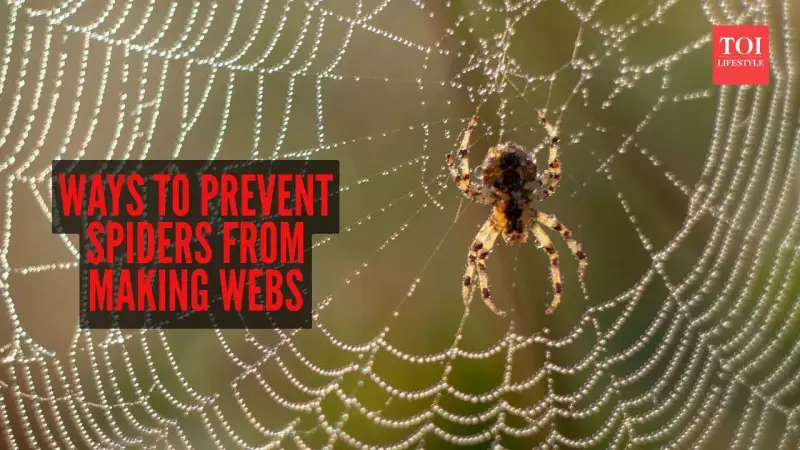
While spiders play a vital role in our ecosystem, discovering their intricate webs inside your home can be an unsettling experience. Fortunately, you don't need harsh chemicals to reclaim your space. Here are eight proven, non-toxic strategies to make your home less inviting to these eight-legged visitors.
Maintain a Clean and Tidy Environment
Spiders are drawn to quiet, dark, and cluttered areas where they can hide and build their webs undisturbed. Basements, spaces behind large furniture, and overcrowded shelves are their favourite haunts. A consistent cleaning routine is your first line of defence. Regular vacuuming and dusting, especially in hard-to-reach corners, will physically remove existing webs, egg sacs, and the spiders themselves. By eliminating their hiding spots, you make your home a far less appealing destination.
Secure Your Home's Perimeter
These pests often sneak indoors through minuscule openings. Common entry points include gaps around window and door frames, vents, and where utility pipes enter the house. A thorough inspection can reveal these vulnerabilities. Seal cracks with a quality caulk, ensure all window and door screens are intact, and apply weather stripping where needed. By fortifying these potential entrances, you significantly reduce the chances of spiders getting inside in the first place.

Harness the Power of Natural Repellents
Nature provides some of the most effective spider deterrents. Spiders navigate largely by smell and are repelled by strong scents from certain essential oils. You can create a powerful, homemade spray by mixing water with oils like peppermint, tea tree, or lavender. Spray this solution along baseboards, in corners, on window sills, and around door frames. The strong aroma disrupts their senses and encourages them to settle elsewhere. Similarly, a 50/50 solution of white vinegar and water works wonders. The acetic acid in vinegar creates an environment that spiders actively avoid.
Employ Physical Barriers and Outdoor Tactics
For a more direct approach, food-grade diatomaceous earth (DE) is an excellent option. This fine, natural powder can be lightly sprinkled along walls, behind appliances, and near cracks. When spiders crawl over it, the powder causes microscopic damage to their exoskeletons, leading to dehydration. It is completely safe for humans and pets when used as directed. Your outdoor habits also play a crucial role. Since spiders follow their food source, bright outdoor lights that attract insects will inevitably attract spiders. Consider reducing exterior lighting, using motion-sensor lights, or switching to yellow, insect-repelling bulbs. Additionally, keep vegetation like shrubs, plants, and firewood stacks trimmed back and away from your exterior walls to remove convenient bridges and hiding spots.
Let Plants Do the Work
Finally, you can use nature's own decor to your advantage. Planting lavender, mint, eucalyptus, rosemary, or chrysanthemums near your windows, doorways, and on balconies acts as a natural, fragrant barrier. These plants emit scents that spiders find offensive, making the areas around them less desirable for web-building. By integrating these simple methods, you can maintain a comfortable, spider-free home in an eco-friendly way.