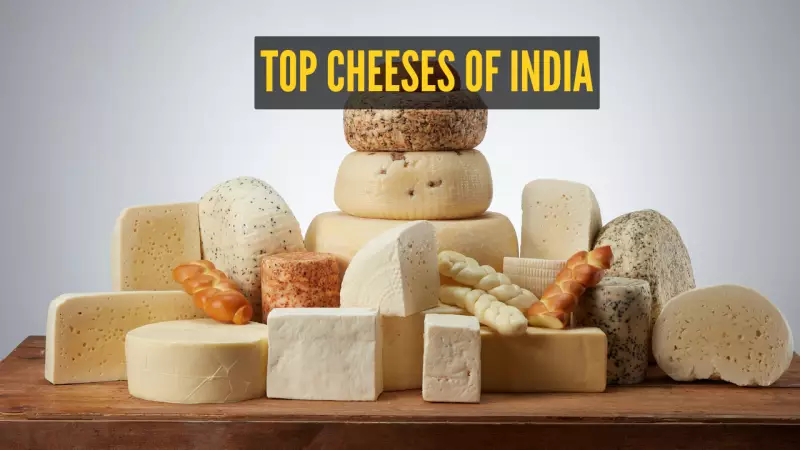
When we think of cheese, exotic foreign varieties often come to mind. However, India boasts a rich and ancient tradition of indigenous cheese-making that remains a well-kept secret for many. These traditional cheeses, crafted by curdling milk and often aging it to develop unique character, are not only versatile in the kitchen but also packed with protein, calcium, and essential fats. In a recent revelation, the global food guide Taste Atlas has spotlighted the top five traditional Indian cheeses that deserve a place on your plate.
Paneer: The Vegetarian Staple with Vedic Roots
Paneer stands as India's most beloved fresh cheese, renowned for its soft, moist, and crumbly texture. Primarily made from pasteurized cow or buffalo milk, its production uniquely avoids rennet, making it a completely vegetarian delight. Its history is deeply rooted in the subcontinent, with mentions tracing back to the Vedas around 6000 BC. The name itself derives from the Persian and Turkish word 'peynir'. A culinary chameleon, paneer excels in North Indian curries, perfectly absorbing strong and spicy flavours.
Regional Delicacies: From Kashmir's Streets to Bengal's Smokehouses
Moving beyond the familiar, India's cheese map reveals stunning regional diversity. From Jammu and Kashmir comes Kalari, often called the mozzarella of Kashmir. This traditionally ripened cheese, made from cow or goat milk, has a mild taste and a delightfully dense, stretchy texture. It's a popular street food, sautéed until crispy outside while staying irresistibly creamy and gooey inside, often served with spices and vegetables.

Gujarat offers Topli Paneer, a delicate, wobbly cheese with custard-like consistency from the Parsi community. Its name, meaning 'basket cheese' in Gujarati, comes from the traditional basket molds used in its making. Unlike standard paneer, its coagulation involves a specific agent alongside a sour element like lemon juice.
The hills of Kalimpong contribute a cheese of the same name, with a history linked to Brother Abraham, a parish priest in Sikkim. This variety features a semi-smooth rind, a slightly acidic flavour, and a crumbly texture, drawing comparisons to aged Gouda. It shines in salads or sandwiches with tomatoes and eggs.
Bandel: A Smoky Portuguese Legacy
Hailing from West Bengal, Bandel cheese is a semi-soft, crumbly cheese with a strong aroma and a distinct smoky, salty taste. Its origins lie in the Portuguese colony of the same name. The process involves separating whey with lemon juice, after which the curd is molded, drained, salted, and smoked. Today, villages like Bishnupur and Tarakeshwar near Kolkata keep this tradition alive. Its robust flavour profile makes it an excellent addition to risottos, salads, and pasta dishes.
This curated list by Taste Atlas underscores that India's cheese legacy is vast and varied. Each cheese tells a story of its region, community, and history. Integrating these traditional options into your diet is not just a culinary adventure but also a way to enjoy wholesome, nutritious food with deep cultural roots.