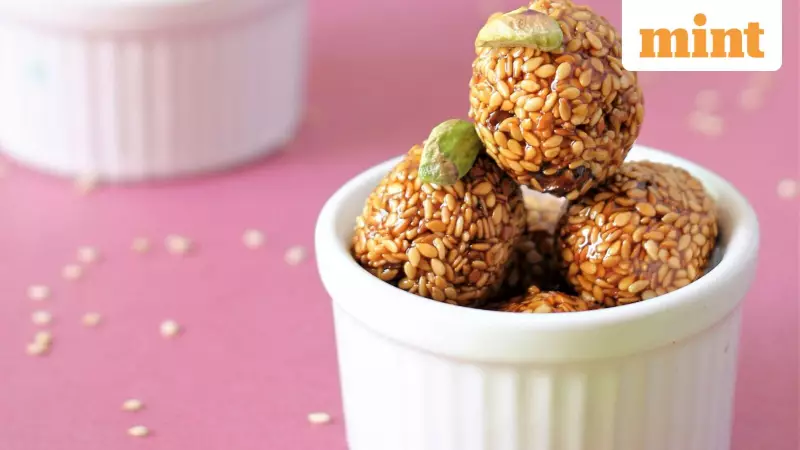
As the harvest festival of Makar Sankranti approaches, Sindhi communities across India prepare to celebrate with unique culinary traditions that blend symbolism, nourishment, and history. Central to these festivities are two humble ingredients: sesame and radish, known together in Sindhi as tirr-moori.
The Significance of Tirr-Moori and Festive Feasts
According to Alka Keswani, a renowned advocate of Sindhi cuisine who documents it on her blog Sindhi Rasoi, these ingredients are synonymous with the festival. "It is mandatory to eat as well as donate them along with rice and oil or ghee," she shares. This practice stems from the festival's core theme of celebrating a bountiful harvest and sharing abundance with the less privileged.
In Keswani's own kitchen, the festive special is a hearty combination of pulao paired with sai bhaji. This nourishing dish combines winter greens like spinach and fenugreek leaves with taro root and Bengal gram. She points out that the intention behind this meal is deeply connected to wellness: "The idea is to make something that nourishes the body and builds immunity as Makar Sankranti marks a seasonal transition believed to cause allergies and colds."

Evolution of Recipes: From Persian Influence to Local Adaptation
Sindhi festive recipes are not static; they have evolved and adapted over time and geography. Chef Deepa Chauhan, a MasterChef India contestant famous for her Sindhi cooking, highlights the Sindhi-style sesame laddoo or tirran ja borinda. Her version incorporates pistachios and rose essence, ingredients that underscore a Persian influence, a legacy of Persian rule in the Sindh region for nearly four centuries.
While the sweetness in these laddoos can come from honey and sugar syrup, giving them a slightly chewy texture, Chauhan's family preference is shaped by migration. "During Partition, when we moved to India, we built homes in cities. In these adoptive places, our foods were influenced by what the locals ate," she explains. For instance, her family began using jaggery as a sweetener for sesame laddoos after her mother learned the recipe from her Marathi boss's wife, illustrating how new recipes seamlessly entered the family kitchen.
Recipe: Alka Keswani's Tirran ja Borinda (Sesame Laddoos)
This authentic recipe from Alka Keswani yields about 20 delicious sesame balls, perfect for the festival.
Ingredients:
- 1 cup sesame seeds
- Half cup sugar
- One-fourth cup water
- Half cup honey
- A pinch of salt (less than one-fourth teaspoon)
- A few unsalted pistachios or any dry fruit of choice
Method:
- In a small pan, combine water and sugar. Heat on a medium flame to make a syrup. Once the syrup reaches a one-strand consistency, turn off the heat and stir in the honey. Set this aside.
- Lightly roast the dry fruits separately and keep them aside.
- In a wide, thick-bottomed pan, dry roast the sesame seeds on a low flame. Toss them frequently with a spatula to prevent burning. They are ready when crisp and easily crushed into a powder between your fingers.
- Add the warm syrup and salt to the roasted sesame seeds. Gently stir to mix. Let this mixture cook on a low flame until the syrup darkens by a few shades and is almost fully absorbed. Do not stir at this stage to preserve the sheen.
- Turn off the flame. Scatter the toasted dry fruits on top without mixing them in.
- Transfer the hot mixture onto a greased plate or parchment paper. Allow it to rest until lukewarm.
- While still warm, take spoonfuls and roll them into small balls (borinda). If the mixture cools completely, it can be cut into squares like chikki.
- Once completely cool, store the laddoos in an airtight container.
These culinary traditions, from the symbolic tirr-moori to the adaptable sesame laddoo, showcase how Sindhi cuisine preserves its identity while embracing new influences, making Makar Sankranti a delicious celebration of both harvest and heritage.