The Enigmatic Shami Kebab: A Treat for the Senses
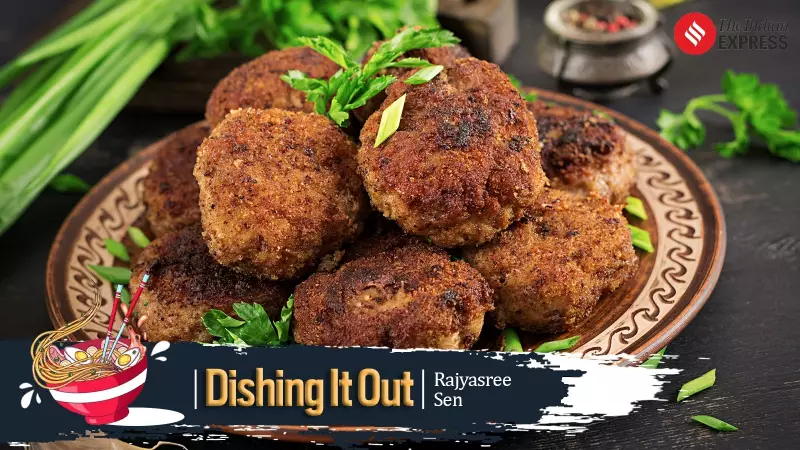
In the bustling evenings of Delhi, across diverse social and economic backgrounds, one culinary delight consistently brings people together: the flattened, pan-fried shami kebab. This isn't a tandoor-cooked delicacy but one crafted meticulously on a tawa. Finely minced meat is combined with a hint of green chilli, onion, ginger, garlic, and aromatic garam masala. The mixture is then shaped into flat patties, as large as one's palm or slightly smaller, and pan-fried to perfection, often without a drop of oil. It is invariably served with raw onion slices and the quintessential North Indian hari chutney made from chilis, coriander, and mint. Less fancy than the galawati or malai tikka, yet profoundly satisfying.
Unraveling the Mysterious Origins
The true origin story of the shami kebab remains shrouded in mystery, with no definitive account recorded in historical texts. While references to kebabs—marinated meat roasted on skewers—appear in ancient Tamil and Sanskrit literature, including a description of a picnic in the Mahabharata where "large pieces of meat were roasted on spits," the specific shami kebab is often traced back to the Middle East.
Several compelling theories attempt to explain its name. One prominent theory links it to Syria, historically known as Bilad-al-Shaam, suggesting the kebab originated there. Another theory points to the Urdu and Dari word 'shaam', meaning evening, as these kebabs are traditionally an evening snack. A lesser-known, yet intriguing theory proposed by some food historians connects it to the village of Sham Churasi in Punjab's Hoshiarpur district.

Historical documentation by travellers like Ibn Batuta notes that royal houses served chicken kebabs during the Sultanate period, indicating that kebabs were a popular fare for all, not just the affluent, and were even consumed as a common breakfast with parathas.
A Mughal Legacy in Nawabi Kitchens
What is historically certain is that the shami kebab journeyed to South Asia during the Mughal era. This migration was facilitated by Muslims from the Middle East who moved to the region and found employment in the kitchens of the nobility and landed gentry. They expertly blended their culinary traditions into the Nawabi kitchens of Lucknow, enriching the local cuisine.
In North India and Delhi, there is a strong culinary consensus: shami kebabs are primarily made from mutton. The author emphatically states that opting for a chicken version is considered sacrilegious. The original shami kebabs were actually made with beef, and Bangladesh is renowned for its delicious beef shami kebab variant.
A traditional shami kebab is a testament to technique. It is made from meat cooked on the bone until tender, then shredded. This method gives the kebab a distinct, textured mouthfeel. While some households use minced meat with a minimal amount of chana dal (split-pea dal) as a binding agent, purists argue for the shredded-meat approach. Other unique additions can include raw green mango or secret family spice blends.
The Art of the Perfect Shami Kebab
Creating an authentic shami kebab is no simple feat. Unlike tandoor-cooked kebabs where flavours can be masked by butter, ghee, or oil, the shami kebab's flavour profile is starkly exposed. This makes the quality of ingredients and the cooking technique paramount.
The author advises against purchasing pre-made, store-bought shami kebabs ready for frying. These often compromise on quality, using too little meat and an excess of dal as a filler. The best versions, it is asserted, are always homemade. A perfectly crafted shami kebab, with its subtle spices and satisfying texture, is described as the perfect accompaniment to a cold Delhi evening, a true comfort food that has stood the test of time and geography.