Union Budget 2026-27 Unveils Comprehensive Indirect Tax Reforms
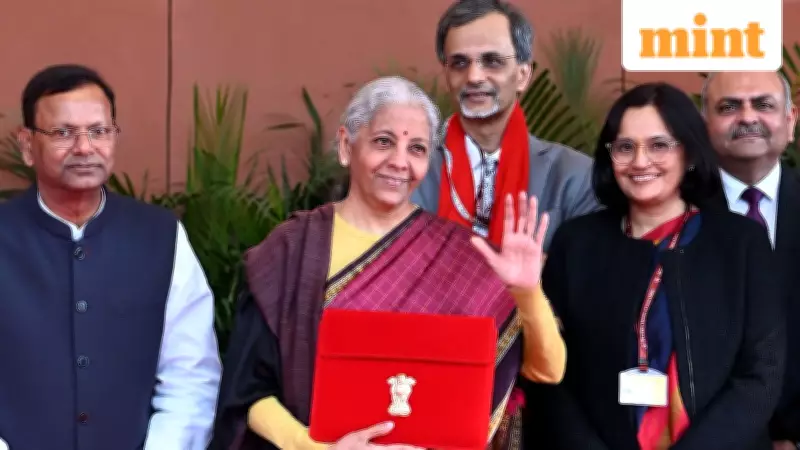
Finance Minister Nirmala Sitharaman presented the Union Budget 2026-27 in Parliament, announcing a significant recalibration of India's indirect tax framework. The budget introduces extensive customs and excise measures designed to simplify tariff structures, strengthen domestic manufacturing capabilities, boost export competitiveness, and provide relief to citizens through cost-of-living initiatives. These proposals align with the government's broader Viksit Bharat growth vision, aiming to create a more predictable and efficient trade ecosystem.
Rationalizing Customs Duty and Exemptions
At the heart of the budget proposals is a renewed focus on rationalizing customs duty exemptions. Sitharaman emphasized the government's commitment to pruning outdated exemptions and correcting inverted duty structures that hinder domestic production. "My proposals for Customs and Central Excise aim to further simplify the tariff structure, support domestic manufacturing, promote export competitiveness, and correct inversion in duty," she stated in Parliament.
The finance minister proposed removing certain exemptions on items that are either manufactured domestically or have negligible imports. Additionally, to enhance transparency and reduce classification disputes, effective duty rates from various customs notifications will be incorporated directly into the tariff schedule. This move is expected to provide greater certainty for industries and streamline administrative processes.

Boosting Export-Oriented Sectors
The budget places special emphasis on key export sectors, including marine products, leather, and textiles. To support seafood exports, the limit for duty-free imports of specified inputs used in processing seafood products has been raised from 1% to 3% of the previous year's export turnover. This measure aims to enhance the competitiveness of Indian seafood in global markets.
For the leather and footwear industry, duty-free import benefits currently available for finished products will be extended to exports of shoe uppers. Furthermore, the time period for exporting final products has been increased from six months to one year for exporters of leather garments, textile garments, footwear, and other leather products, offering greater operational flexibility.
Support for Clean Energy and Strategic Industries
In alignment with India's clean energy goals, the budget proposes extending the basic customs duty exemption on capital goods used for manufacturing lithium-ion cells to include battery energy storage systems. A full exemption on basic customs duty has also been announced for the import of sodium antimonate, a key material used in manufacturing solar glass.
Strategic sectors received further support, with Sitharaman proposing to extend the existing customs duty exemption on imports required for nuclear power projects until 2035. The scope of this exemption has been expanded to cover all nuclear plants, irrespective of capacity. Additionally, capital goods required for processing critical minerals in India will be eligible for customs duty exemption.
Targeted Relief for Aviation, Electronics, and SEZs
The budget announced targeted relief measures for the civil and defence aviation sectors. Exemptions on basic customs duty have been proposed for components and parts used in manufacturing civilian and training aircraft, as well as raw materials imported for defence-sector maintenance, repair, and overhaul operations.
To deepen value addition in the electronics sector, Sitharaman proposed exempting basic customs duty on specified parts used in manufacturing microwave ovens. In a one-time measure, manufacturing units in Special Economic Zones (SEZs) will be allowed to sell a limited proportion of their output into the Domestic Tariff Area at concessional duty rates, addressing capacity underutilisation caused by global trade disruptions.
Ease of Living Initiatives
A notable "Ease of Living" initiative is the proposed reduction in customs duty on dutiable goods imported for personal use, with the tariff rate halved from 20% to 10%. The budget also includes exemptions on basic customs duty for 17 drugs or medicines, with a particular focus on cancer treatment.

Furthermore, seven additional rare diseases will be included for the purpose of exempting import duties on personal imports of drugs, medicines, and food for special medical purposes used in their treatment, providing much-needed relief to patients and their families.
Modernizing Customs Processes
The budget outlines an ambitious overhaul of customs procedures to reduce physical intervention and speed up cargo movement. Sitharaman emphasized that India's growing role in global trade necessitates "minimal intervention for smoother and faster movement of goods and greater certainty to the trade."
Key measures include:
- Extending the duty deferral period for Tier 2 and Tier 3 Authorised Economic Operators (AEOs) from 15 days to 30 days, with similar facilities proposed for eligible manufacturer-importers.
- Increasing the validity of advance rulings binding on customs from three to five years to aid business planning.
- Transforming the customs warehousing framework into an operator-centric system based on self-declaration, electronic tracking, and risk-based audits, replacing officer-dependent approvals and reducing transaction costs.
These reforms are expected to enhance efficiency, reduce compliance burdens, and foster a more trust-based environment for trade and industry.